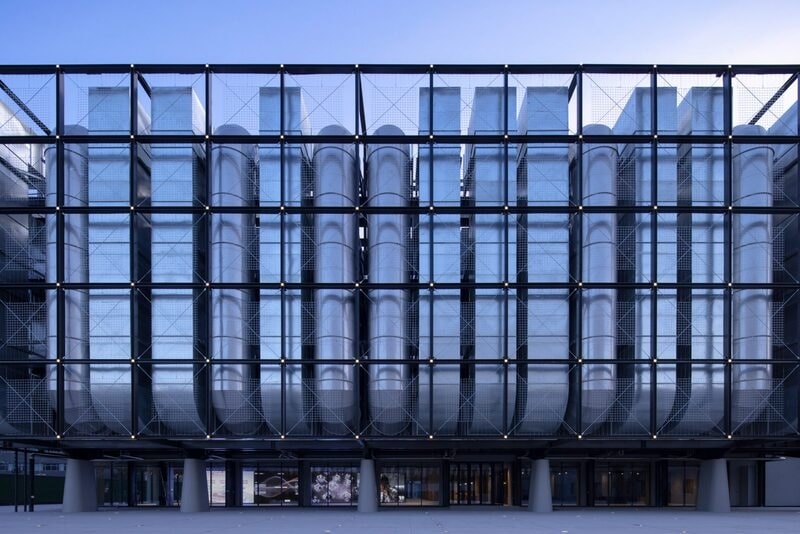
Spark 761 AI data centre Beijing presents a transparent civic computing facility designed by llLab in the Jiuxianqiao district of Beijing. The building replaces the conventional sealed data center model with a visible structural grid and glass enclosure that exposes select internal zones. Public program areas, including offices, exhibition spaces, and multi-use rooms, are housed in glass volumes, while restricted computing infrastructure is contained within enclosed black box zones. The exterior lighting system visually reflects internal digital activity at night.
Beijing Electronic Digital and Intelligence commissioned the project to support large-scale cloud computing and artificial intelligence processing. Structural framing was engineered to carry both heavy server loads and public circulation areas. The layout separates thermal and acoustic conditions required for hardware from accessible public functions. The building is conceived as an operational infrastructure facility that also serves as an urban architectural presence.
Image Credit: Arch-Exist Photography
What Makes This Trend Stand Out
- Transparent Data Centers
- Data centers featuring transparent designs allow public visibility into digital operations, fostering community engagement and transparency.
- Civic Computing Facilities
- Integrating civic spaces with computing facilities revolutionizes traditional data centers by promoting community interaction and multifunctionality.
- Interactive Digital Architecture
- Buildings that visually reflect digital processes through lighting systems create dynamic and engaging urban landmarks.
Sectors Adopting This
- Cloud Computing
- The integration of public spaces within data centers marks a shift in how cloud computing facilities are perceived and utilized in urban environments.
- Urban Architecture
- Innovative designs combining operational infrastructure with architectural elegance redefine the role of buildings in city landscapes.
- Artificial Intelligence Processing
- Facilities that integrate AI processing capabilities within public-friendly environments highlight the evolving intersection of technology and community.