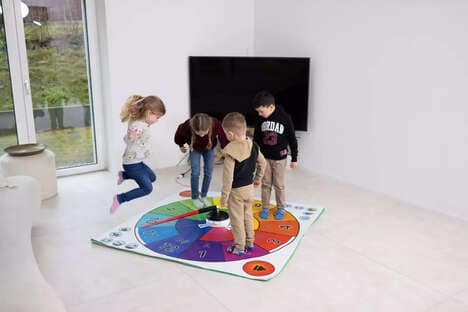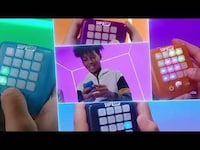
Nadia Guevara and Pedro Bori, a pair of educational psychologists from Mexico teamed up to create Smash-a-Ball, a wearable toy that fosters cognitive development in children with vision impairments. The game consists of a few parts, including a backpack, a wrist-worn band and a board that provides tactile feedback. As Bori describes: "When the child is wearing the backpack he will get tactile stimulus from the backpack in a way that he/she has to mimic with the main board, as fast and precise possible."
With components that give feedback and stimuli for pattern matching, this helps to improve a child's memory, reaction time, spatial awareness and confidence. In a child's later life, these skills are vital for adapting to unfamiliar environments and situations.
Key Themes Behind This Trend
- Wearable Tactile Education
- Creating wearables with not just visual, but tactile stimuli to aid learning in children with disabilities.
- Electronic Toys for Inclusion
- Designing games and toys with electronic components that remove barriers to play and empower children with disabilities.
- Assistive Technology for Play
- Developing technologies that foster cognitive development and enable play in children with disabilities.
Where This Applies
- Toy Manufacturing
- Innovating in the toy manufacturing industry to accommodate children with disabilities and provide more inclusive play experiences.
- Assistive Technology
- Providing cognitive and sensory assistive technology for persons with disabilities to advance the field of disability inclusion.
- Education Technology
- Incorporating touch and feedback in education-technology-enabled learning tools to promote cognitive development in children with disabilities.