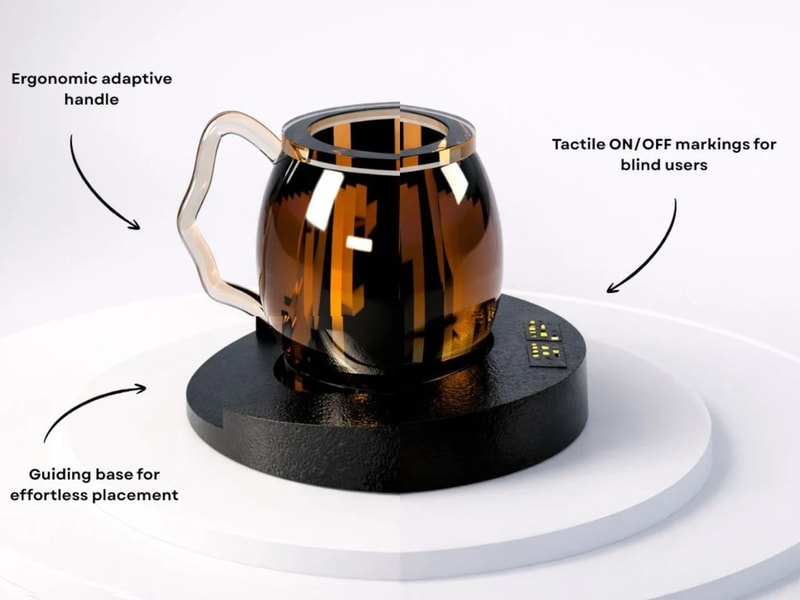
This Smart Cup for Visually Impaired Users is an all-in-one vessel that combines the functions of a kettle, teapot, and drinking cup into a single object. Designed by Ivana Nedeljkovska, the product eliminates the need to pour hot water between containers, reducing risk for blind and visually impaired users. Smart Cup for Visually Impaired Users is built to be operated entirely through touch, with tactile controls and Braille ON/OFF markings that allow independent use without visual feedback.
The design includes a guided base that helps position the cup correctly and a heat-resistant exterior to make handling safer at high temperatures. Its rounded form and adaptive handle support a secure grip, while integrated heating removes the need for separate appliances. By consolidating multiple steps into one object, the product addresses common risks associated with hot liquids.
Image Credit: Ivana Nedeljkovska
What's Driving This Trend
- Inclusive Touch-first Interfaces
- Devices designed primarily for tactile interaction and Braille labeling could enable products that function reliably without visual prompts, broadening accessibility across consumer electronics.
- Integrated Single-use Appliances
- Combining multiple appliance functions into a single vessel presents opportunities for compact, energy-efficient designs that reduce user steps and clutter in domestic spaces.
- Tactile Guidance Systems
- Physical alignment bases and textured cues can create intuitive positioning and handling experiences that decrease user error and risk when interacting with heated or hazardous items.
Who This Affects Most
- Home Appliance Manufacturing
- Compact all-in-one heating-and-serving units could disrupt traditional kettle and teapot markets by shifting consumer expectations toward multifunctional, safety-focused appliances.
- Assistive Technology
- Products emphasizing touch-first controls and integrated safety features may redefine assistive solutions by offering mainstream devices that serve both disabled and non-disabled users.
- Hospitality and Food Service
- Heat-resistant, self-contained serving vessels have the potential to change back-of-house workflows and guest service models by simplifying beverage preparation and reducing spillage incidents.