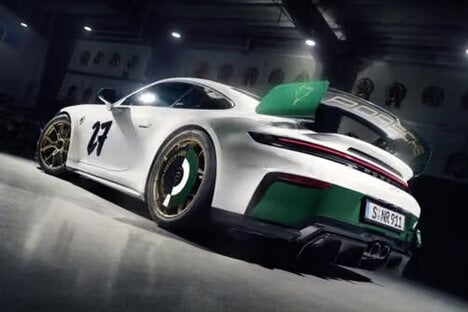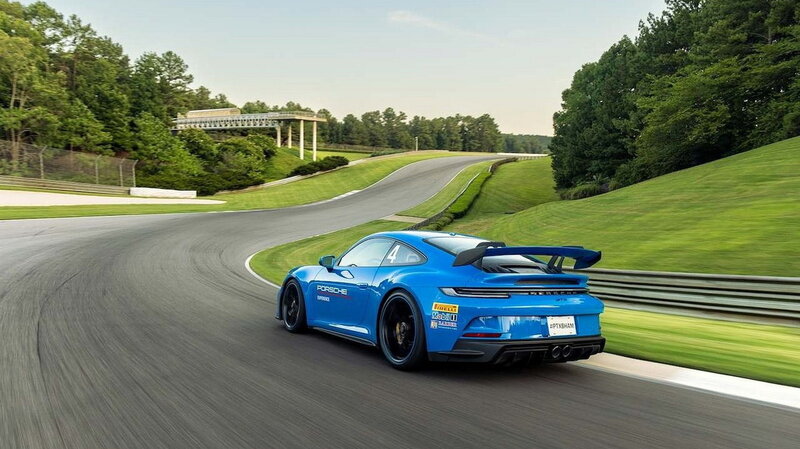
For 2027, Porsche is expanding its ‘Track Experience’ with GT3-only instruction, marking the first time a single model anchors a full school. Every car in the school is a ‘911 GT3,’ giving drivers a place to practice slides. ‘GT Drift’ costs $1,500 for a half day. Both ‘GT Drift’ and the three-day ‘Masters GT’ program run only at Barber Motorsports Park in Birmingham, Alabama.
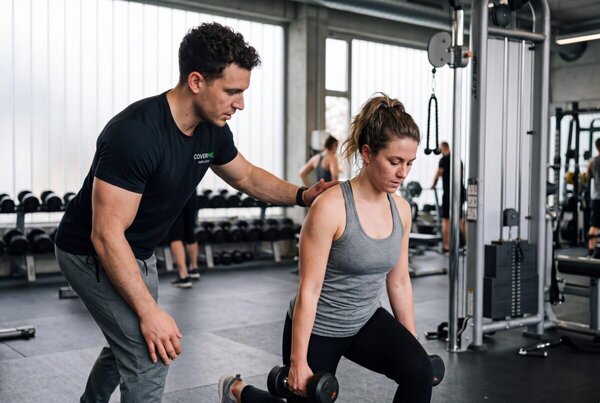
‘GT Drift’ uses a brief vehicle-dynamics session and skid-pad time to separate car-control practice from full-track pressure. ‘Masters GT’ is reserved for graduates of Porsche’s ‘Masters RS’ course, keeping coaching and data review focused on drivers who already know the basics.
At $1,500, the shorter format makes GT3 instruction easier to sample than a multiday school. The single-model setup also makes track training more specialized, giving Porsche a clearer way to sell seat time to drivers who want coaching tied to one car.
Image Credit: Porsche
Why This Trend Is Growing
- Single-model Training
- Brand-specific performance schools create premium learning environments where instruction, telemetry, and vehicle behavior are tightly aligned to one high-value product.
- Sample-size Motorsports
- Short-format track experiences lower the commitment barrier for affluent drivers while preserving exclusivity around advanced vehicle-control coaching.
- Data-driven Driver Coaching
- Focused programs built around skilled participants allow automakers to turn performance data review into a differentiated service layer for enthusiast customers.
Industries Being Reshaped
- Luxury Automotive
- Automakers can extend flagship models into experiential products that deepen customer loyalty beyond the initial vehicle purchase.
- Performance Education
- Specialized driving schools gain new value by narrowing curricula around exact platforms, skill levels, and measurable driver improvement.
- Experiential Tourism
- Destination-based motorsport programs blend travel, status, and technical instruction into high-margin leisure offerings for niche audiences.