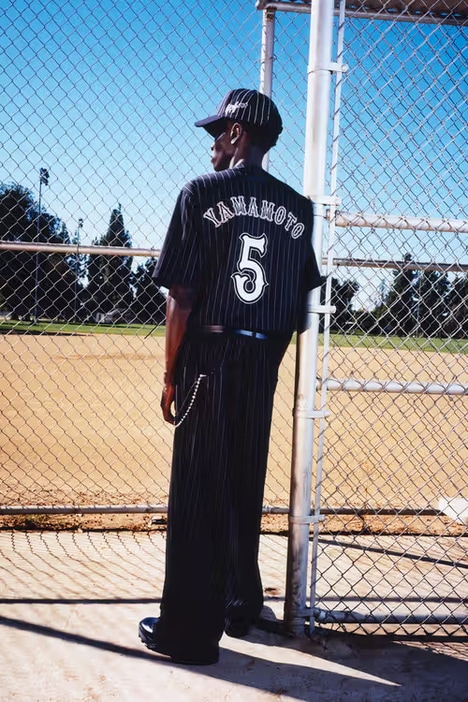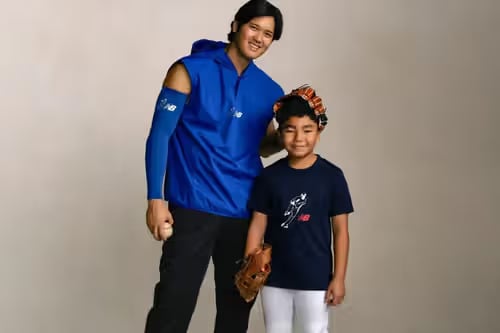
The Shohei Ohtani x New Balance Spring Summer 2026 signature collection is a seasonal range of performance apparel and footwear developed around baseball athlete Shohei Ohtani’s preferences and training demands. The latest collection includes technical tops, pants, outer layers, and footwear. Notably, each is constructed from materials selected for moisture management, stretch, and support. Design elements such as strategic seam lines and paneling are incorporated to support movement patterns common in training and competition.
Footwear in the signature collection features updated sole units designed for responsiveness and traction, paired with engineered uppers that balance containment with flexibility. Apparel pieces use woven and knit textiles chosen for breathability and comfort during extended wear. Branding includes collaborative identifiers between Ohtani and New Balance applied through labels and tonal accents.
Image Credit: New Balance
What's Driving This Trend
- Athlete-centric Design
- A shift toward collections tailored to the biomechanical and aesthetic preferences of elite athletes, enabling hyper-personalized product lines tied to individual performance profiles.
- Performance-material Hybridization
- Experimental blends of woven and knit textiles combined with moisture-management and stretch technologies create multi-functional garments that blur the line between training gear and everyday wear.
- Adaptive Footwear Engineering
- Sole and upper systems engineered for simultaneous responsiveness, traction, containment, and flexibility suggest modular or semi-custom midsole and traction architectures informed by sport-specific movement data.
Who This Affects Most
- Sports Apparel
- Strategic seam lines and paneling optimized for movement indicate a move toward smart patterning and digitally graded production techniques in garment manufacturing.
- Athletic Footwear
- Engineered uppers and updated sole units point to configurable fit systems and sport-specific traction modules driven by athlete kinematics and sensor data.
- Textile Manufacturing
- An emphasis on moisture management, breathability, and stretch underscores demand for functional yarns, bio-based finishes, and responsive textile coatings.