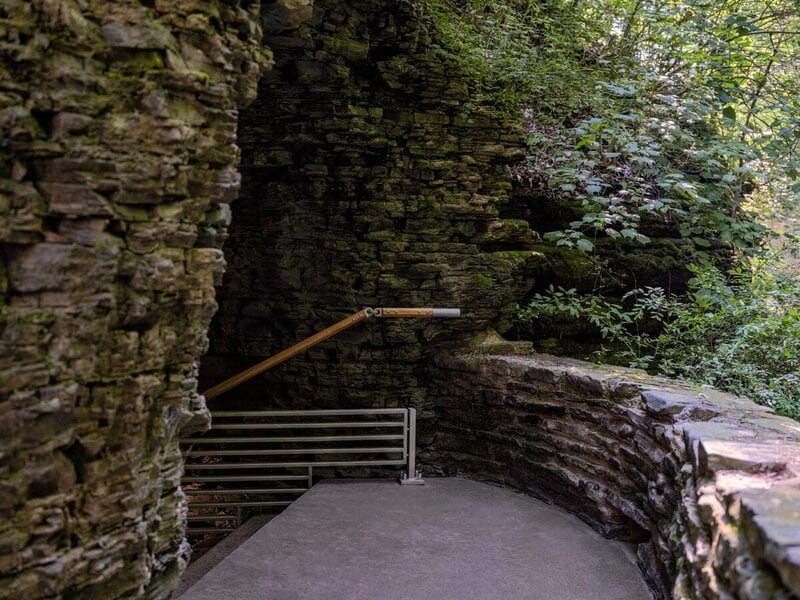
The Sentry Bridge by Schlaich Bergermann Partner and Snøhetta replaces an aging pedestrian crossing in Watkins Glen State Park, spanning a narrow gorge at the entrance to the park's trail network. The stainless steel bridge is anchored to the stronger north-side bedrock and cantilevers 46 feet across the gorge, reducing the need for structural support on the opposite side. Prefabricated off-site and installed by crane, the crossing frames views of waterfalls, rock walls, and the stream below while introducing a contemporary landmark within the historic landscape.
Black locust timber rails, rough-sawn hemlock-formed concrete, and a bluestone landing complement the steel structure with regionally inspired materials. Custom bronze castings depicting local plants, wildlife, and the site's original arch bridge are integrated throughout the approach, encouraging visitors to explore the area's natural and cultural history.
Image Credit: Barrett Doherty
Why This Trend Is Growing
- Cantilevered Park Infrastructure
- Minimal-contact bridge designs create potential for safer visitor circulation in sensitive natural sites while reducing construction impact on fragile terrain.
- Prefabricated Landmark Crossings
- Off-site fabrication paired with crane installation allows remote parks and heritage destinations to receive architecturally ambitious infrastructure with shorter disruption windows.
- Interpretive Material Integration
- Regional timber, stone, concrete textures, and embedded artistic details turn functional crossings into storytelling platforms that deepen cultural and ecological engagement.
Industries Being Reshaped
- Civil Engineering
- Advanced structural systems such as single-side anchoring present new possibilities for infrastructure in geologically constrained or environmentally protected locations.
- Architecture
- Contemporary design interventions in historic landscapes offer opportunities to blend iconic forms with contextual materials and visitor-focused spatial experiences.
- Parks and Recreation
- Upgraded pedestrian networks can reposition trail entrances as immersive destination features that support accessibility, education, and place-based tourism.