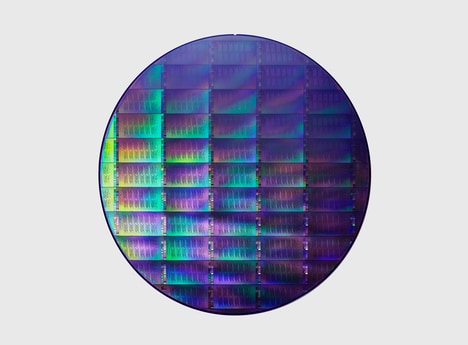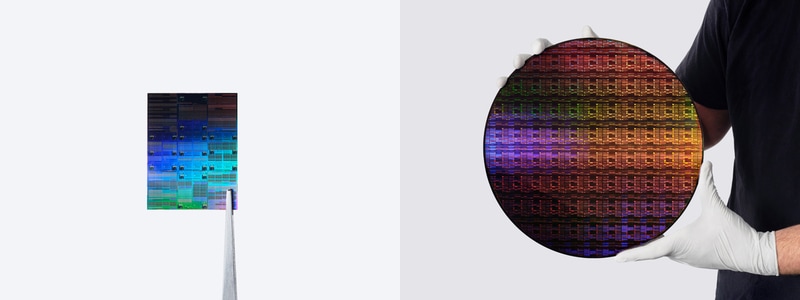
IBM has unveiled a groundbreaking semiconductor breakthrough with the introduction of the world's first sub-1-nanometer chip technology. The innovation features a revolutionary transistor architecture at the 0.7 nanometer, or 7 angstrom, node, which packs nearly 100 billion transistors onto a chip the size of a fingernail.
IBM's semiconductor breakthrough is enabled by a novel three-dimensional nanostack architecture that vertically stacks and staggers transistors. This design represents a fundamental departure from traditional planar designs and allows the industry to continue scaling even as features approach atomic dimensions.
Consumers would be interested in this innovation because it promises to deliver substantial leaps in computing capability, with projections indicating up to 50% more performance and 70% greater energy efficiency compared to the previous 2-nanometer node chips. In other words, the sub-1-nanometer chip technology entails faster, more powerful, and more energy-efficient devices.
Image Credit: IBM
Why This Trend Is Growing
- Atomic-scale Computing
- Sub-1-nanometer architectures signal a new performance frontier where chipmakers can redefine processing density, speed, and device capabilities near atomic limits.
- Vertical Transistor Stacking
- Three-dimensional nanostack designs introduce new pathways for continued semiconductor scaling as traditional planar transistor layouts reach physical constraints.
- Ultra-efficient Processing
- Greater energy efficiency at advanced nodes expands the potential for high-performance computing in smaller, cooler, and longer-lasting connected devices.
Industries Being Reshaped
- Semiconductors
- Advanced fabrication ecosystems gain strategic importance as sub-1-nanometer chips reshape competition around materials, lithography, packaging, and transistor design.
- Consumer Electronics
- More powerful and energy-efficient processors can accelerate premium device differentiation across smartphones, laptops, wearables, and immersive computing products.
- Data Centers
- Higher-density chips with lower power requirements create meaningful infrastructure shifts for cloud computing, artificial intelligence workloads, and hyperscale energy management.