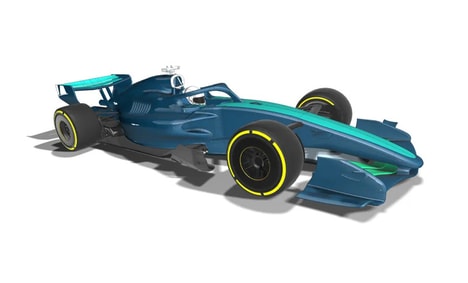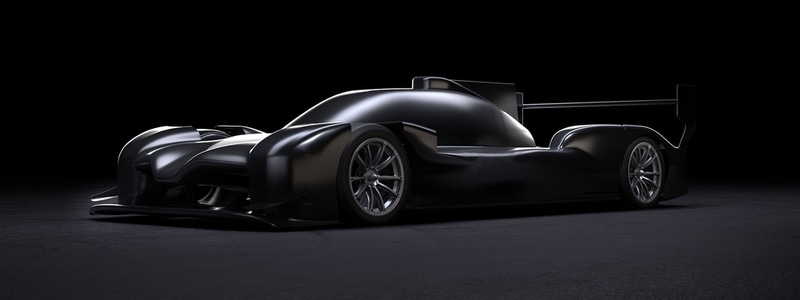
IBM and the Dallara Group have entered a collaboration to apply artificial intelligence and eventually quantum computing to the design of high-performance vehicles, with the goal of dramatically reducing the time required for aerodynamic simulations.
The companies have developed a physics-based AI foundation model trained on Dallara’s proprietary aerodynamic data from a high-performance vehicle, and early results show that while a traditional computational fluid dynamics analysis of multiple rear diffuser configurations took several hours, the AI model completed the same evaluations in approximately ten seconds while identifying the same optimal design within comparable error margins.
For race car engineers, cutting simulation times from days or weeks down to minutes means they can explore a much wider range of design options during early development phases, potentially leading to better handling, higher speeds, and improved safety on tracks like IndyCar where average speeds exceed 230 miles per hour.
Image Credit: IBM x Dallara Group
Key Themes Behind This Trend
- Physics-based AI for Aerodynamics
- Simulation runtimes are compressed from hours to seconds by physics-informed models, supporting far larger parameter sweeps and novel aerodynamic geometries.
- Quantum-accelerated Simulation
- Emerging quantum compute workflows promise orders-of-magnitude speedups in solving fluid dynamics problems, potentially enabling optimization of coupled multi-physics designs previously too costly to explore.
- Real-time Design Exploration
- Near-instant evaluation of design variants permits dense iterative refinement during early-stage engineering, increasing the likelihood of breakthrough performance improvements.
Where This Applies
- Automotive Performance Engineering
- High-fidelity, low-latency simulation capabilities could shift competitive advantage toward teams that integrate AI-driven design pipelines for handling, top-speed, and safety trade-offs.
- Motorsport Teams and Constructors
- Race programs stand to benefit as rapid aerodynamic evaluations enable broader setup experimentation and faster adaptation to track-specific aerodynamic demands.
- Aerospace and Defense Design
- Faster multi-physics modeling can accelerate prototyping of advanced airframes and control surfaces, opening pathways to more efficient and unconventional aircraft configurations.