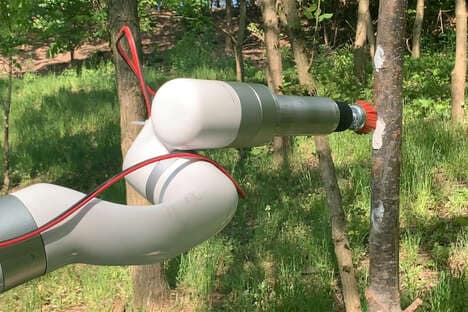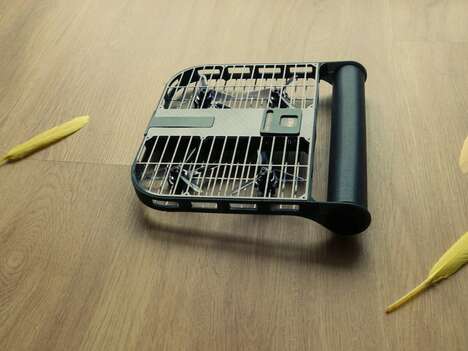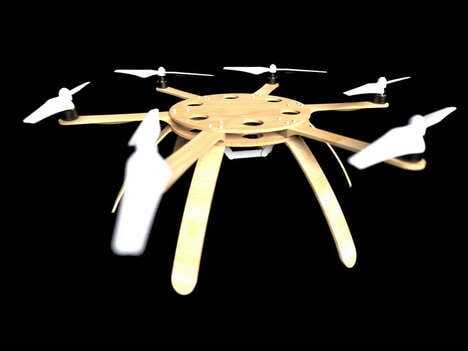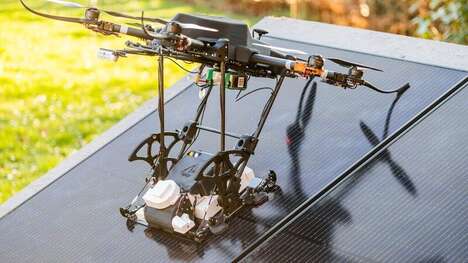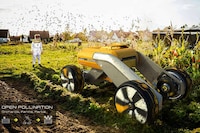

The decline of honey bee populations is a major concern, given how vital they are to food security globally -- which is where this breakthrough robotic bee comes in. Developed after four years by the Warsaw University of Technology in Poland, the B-Droid is a flying robot that supports honey bees by pollinating flowers and crops.
The first automated pollination system has a camera onboard and a computer externally it uses to plan a flight path as it pollinates. The robotic bee was created to relieve stress on natural bees by a team scientists from a number of different academic backgrounds, including aeronautical engineering, electronics, mechanics and robotics. Led by Dr Rafal Dalewski, the team began working on a bee on wheels, which evolved into a pollinating drone.
Key Themes Behind This Trend
- Automated Pollination
- The development of B-Droid opens up opportunities for developing automated pollination systems that can relieve stress on bees and optimize crop yield.
- Robotics in Agriculture
- B-Droid serves as an example of how robotics can be applied in agriculture, especially in pollination and crop management.
- Sustainable Farming
- With declining bee populations being a major concern, technologies like B-Droid can provide a sustainable solution for food production with minimal environmental impact.
Where This Applies
- Agriculture
- B-Droid has the potential to disrupt the agriculture industry by introducing low-cost, automated pollination systems and improving crop yield.
- Robotics and Automation
- B-Droid can be a starting point for companies in the robotics and automation industry to develop innovative solutions for various industrial processes, especially in agriculture.
- Environmental Technology
- B-Droid offers opportunities for companies in the environmental technology industry to develop sustainable solutions for food production that can mitigate the negative impact on the environment.