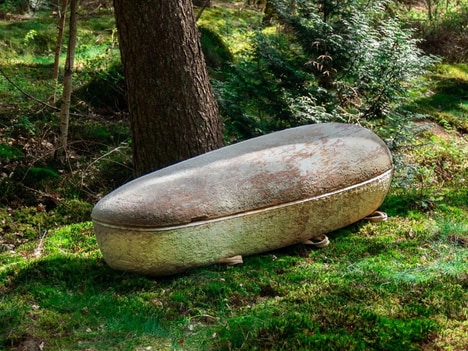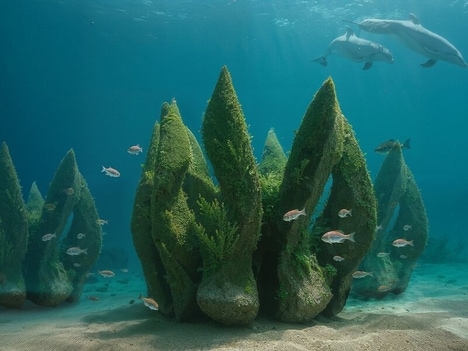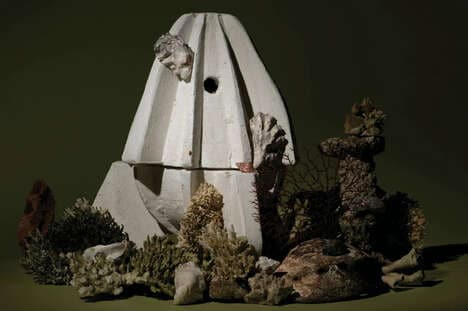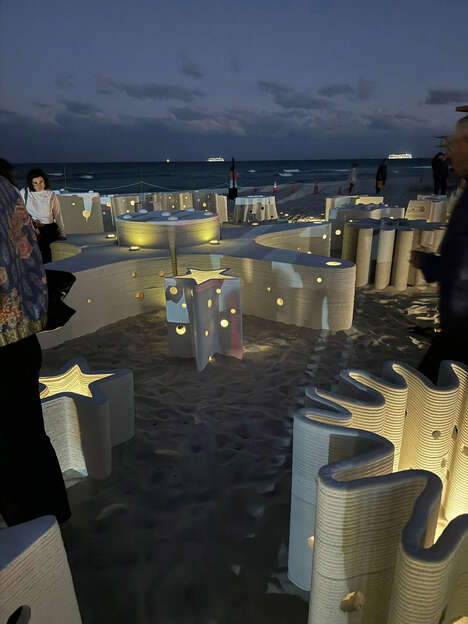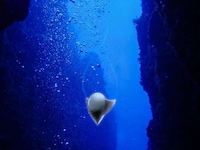

Resting Reefs were designed by graduates from London's Royal College of Arts. They are formed from cremated ashes to provide an impactful and meaningful funeral service. The goal is to encourage folks to partake in practices that regenerate endangered ecosystems through sustainable end-of-life practices.
To create the underwater urns, the ashes of the deceased are mixed with a binder and crushed oyster shells that restaurants discard. This creates a composite that is then 3D-printed into organically-shaped mounds for optimal functionality. The pods are shaped to mimic the form of the natural growth process of ancient stromatolite reefs to create ideal growing conditions for oysters on their surfaces. The goal is to regenerate biodiversity by creating a specific habitat for oysters and other sea life.
Image Credit: Resting Reefs
What's Driving This Trend
- Sustainable Funeral Practices
- Resting Reefs exemplify a trend towards sustainable funeral practices that prioritize environmental regeneration.
- 3d-printing in Eco-friendly Solutions
- The use of 3D-printed composite materials in Resting Reefs represents a trend towards using new technologies to create eco-friendly solutions.
- End-of-life Regeneration
- Resting Reefs reflect a trend towards end-of-life practices that emphasize regeneration and renewal rather than traditional burial practices.
Who This Affects Most
- Funeral Services
- Resting Reefs represent a disruptive innovation opportunity for funeral services looking to offer sustainable and eco-friendly options for their clients.
- 3D Printing
- Resting Reefs create an opportunity for 3D printing companies to focus on creating eco-friendly materials and solutions.
- Sustainable Agriculture and Seafood
- Resting Reefs present an opportunity for sustainable agriculture and seafood industries to contribute to biodiversity and environmental preservation efforts.