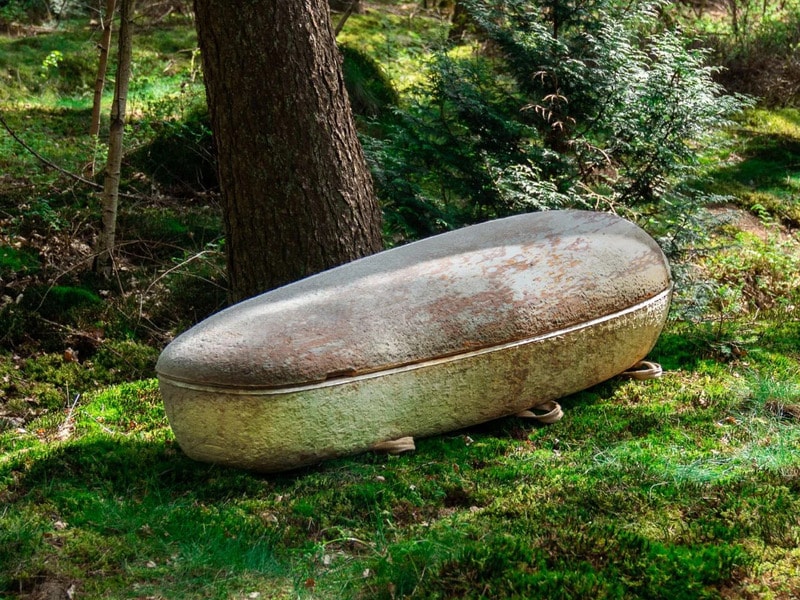
Living Cocoon is a coffin developed by Loop Biotech that uses mycelium and natural fibres instead of wood, metal, or chemical-based materials to create a fully biodegradable burial solution. The casket is grown rather than built: mycelium is combined with hemp fibres and shaped in a mould over a short growing cycle. The finished casket is light, durable, and intended for use in any weather conditions.
Once buried in soil, the material decomposes naturally and gradually transforms into nutrient-rich organic matter, enriching the surrounding ground instead of leaving lasting waste. The Living Cocoon eliminates the need for glues, metals, or treated woods that contribute to long-term soil contamination. The design follows dimensions compatible with standard burial plots and supports typical coffin handling procedures. Its development represents a shift in funeral practices toward ecological responsibility and sustainable end-of-life solutions.
Image Credit: Loop Biotech
Key Themes Behind This Trend
- Sustainable Funeral Practices
- A shift towards eco-friendly burial methods in the funeral industry reflects growing awareness and demand for sustainable end-of-life solutions.
- Bio-material Innovation
- The use of mycelium and natural fibers exemplifies innovative applications of biodegradable materials in product development, paving the way for eco-friendly alternatives across various industries.
- Circular Economy Integration
- Incorporating principles of the circular economy, burial caskets made from biodegradable materials promote the responsible lifecycle of products, reducing waste and supporting soil health.
Where This Applies
- Eco-friendly Funeral Services
- The funeral services industry is transforming with the introduction of sustainable and biodegradable options, offering consumers environmentally responsible choices for end-of-life ceremonies.
- Biodegradable Material Production
- Advancements in biodegradable material production are enabling the creation of eco-friendly products that break down naturally, minimizing environmental impact.
- Sustainable Product Design
- The emphasis on designing products that are fully compostable and environmentally sustainable is influencing industries to rethink traditional manufacturing and material usage.