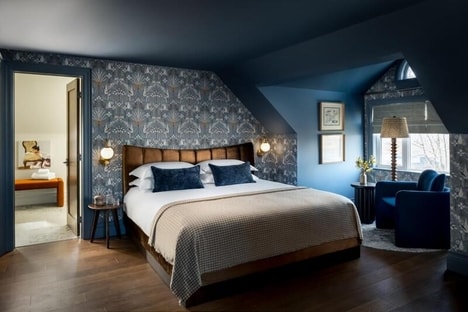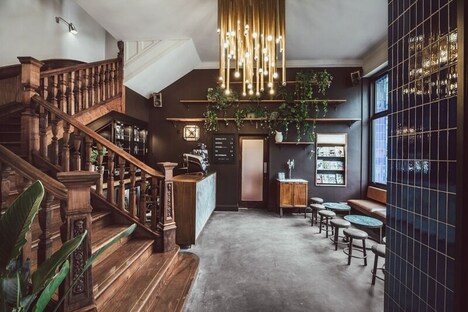
Hill Hall Hotel brings repurposed schoolhouse hotels to Fayetteville, West Virginia, transforming two former educational buildings into a boutique hospitality destination. Developed by Mountain Shore Properties, the property preserves original architectural features while introducing residential-style accommodations and communal gathering areas. The conversion gives travelers an opportunity to experience the buildings' history alongside contemporary comforts.
The 40-room hotel occupies a 1923 high school and neighboring middle school, with guest rooms shaped by their original layouts. Its restaurant, Patsy's, features Appalachian-inspired dishes, while a 24-hour pantry provides refreshments through an honor system. Local artwork, vintage furnishings, and partnerships with outdoor recreation providers connect guests with the surrounding region.
For the hospitality industry, this approach demonstrates how historic properties can attract travelers through distinctive accommodations and local experiences. The hotel's proximity to New River Gorge National Park also creates opportunities to encourage longer visits and support Fayetteville businesses.
Image Credit: Hill Hall Hotel
What's Driving This Trend
- Adaptive Heritage Hospitality
- Historic school, civic, and institutional buildings are becoming differentiated lodging assets as preservation-minded design creates memorable stays with built-in storytelling value.
- Community-centered Boutique Stays
- Hotels rooted in local art, regional food, and neighborhood partnerships can deepen guest engagement while distributing tourism benefits to nearby businesses.
- Experiential Small-town Tourism
- Proximity to natural attractions and culturally distinctive accommodations is reshaping smaller destinations into multi-day travel markets with premium experiential appeal.
Who This Affects Most
- Hospitality
- Boutique operators can distinguish properties through adaptive reuse models that combine historic architecture, residential-style comfort, and curated local amenities.
- Real Estate Development
- Underused educational and civic buildings represent conversion opportunities where preservation, zoning flexibility, and hospitality demand intersect.
- Travel and Tourism
- Destination marketers gain new ways to package lodging, outdoor recreation, dining, and heritage experiences into longer-stay regional itineraries.