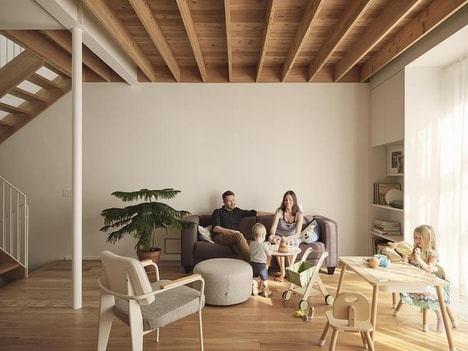
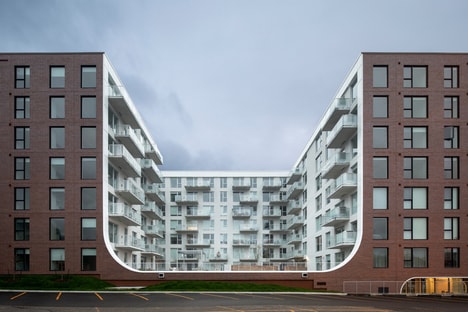
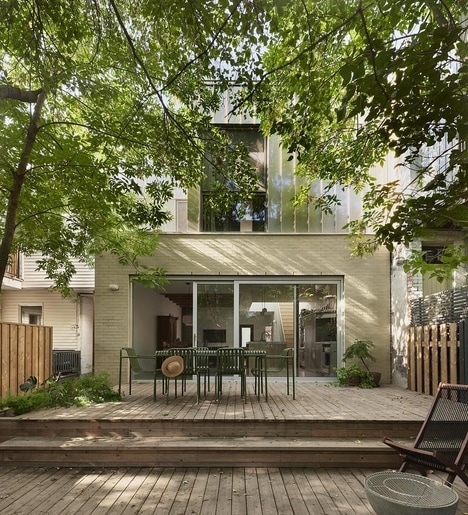
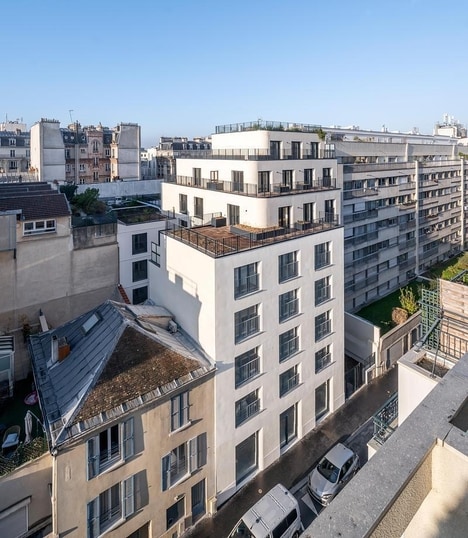
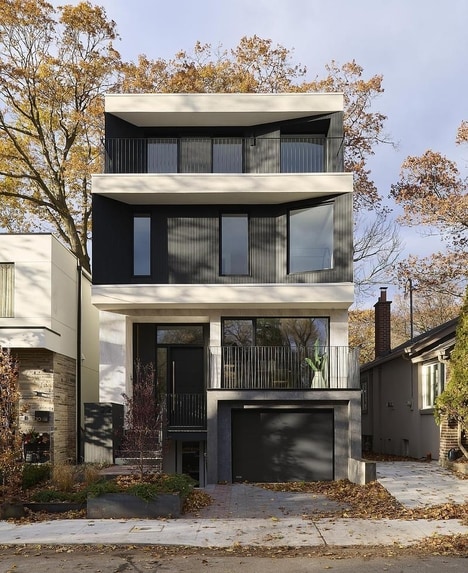
Gabriel Fain Architects has completed the Montrose Sixplex — a six-unit rental housing project in a low-rise Toronto neighborhood. This design venture leverages the city's evolving zoning regulations to explore a model of gentle density through a carefully composed ensemble of a street-facing multiplex and two laneway houses oriented toward a nearby park.
The street-facing building adopts a single gabled form wrapped in Belgian buff brick, with pitched roofs, proportioned window openings, limestone sills, and patterned brickwork that create a sense of permanence and continuity with the surrounding residential character. The laneway houses, on the other hand, though smaller, align in massing and proportions to read as a unified architectural ensemble that reimagines the laneway as a shared front-yard condition connected to the park.
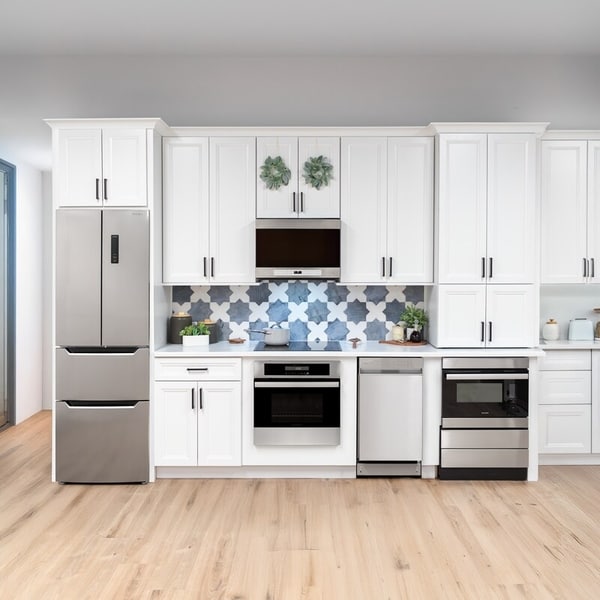
Gabriel Fain Architects collaborated with Unison Group for the interior of the rental housing project.
Image Credit: Félix Michaud
Key Themes Behind This Trend
- Gentle Density Rentals
- Evolving zoning frameworks are making small-scale multiplexes a viable path for adding rental supply while preserving neighborhood character.
- Laneway Living
- Underused rear lots and service lanes are becoming desirable residential frontages through compact homes, shared outdoor space, and park-oriented planning.
- Contextual Modern Housing
- Traditional materials, pitched rooflines, and proportioned façades are supporting new rental formats that feel integrated within established low-rise communities.
Where This Applies
- Residential Real Estate
- Low-rise rental infill is expanding the middle ground between single-family homes and high-rise apartments in space-constrained urban markets.
- Architecture and Design
- Architectural practices are differentiating multifamily projects through cohesive massing, heritage-informed detailing, and human-scaled density models.
- Urban Planning
- Municipal policy shifts are creating new development capacity through multiplex permissions, laneway housing, and neighborhood-sensitive density strategies.