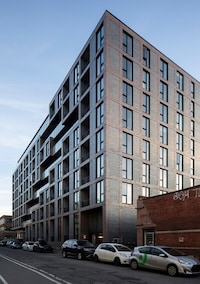
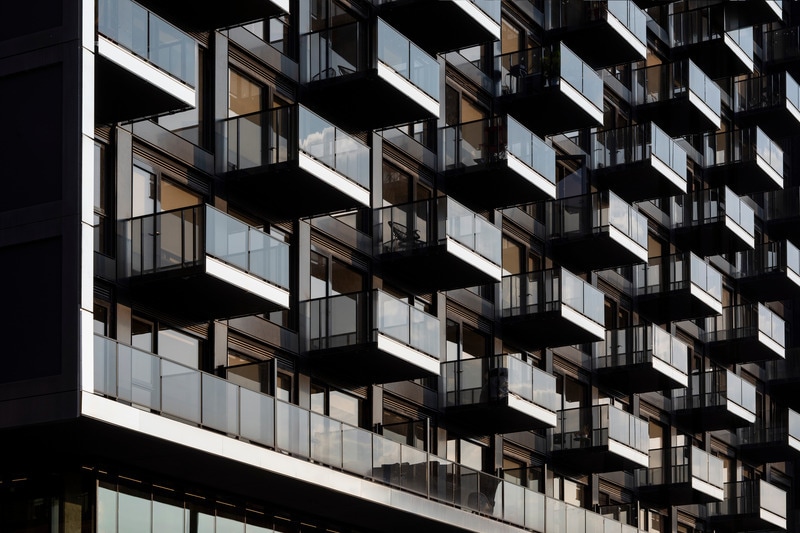
ACDF Architecture has completed a residential complex in Montreal named Griffin Square, situated in the developing Griffintown area. The project consists of two high-rise structures — 16 and 19 stories tall — designed with a fragmented form to establish a significant presence within the varied urban landscape.
A key architectural feature of Griffin Square is the treatment of the façades — those facing public streets utilize a darker, subdued material palette to provide a composed counterpoint to the busy surroundings, while the inward-facing sides employ lighter tones to maximize natural light for residents. The most distinctive element is the park-facing elevation, which is conceived as a dynamic, picture-like surface. This is achieved through a rhythmic pattern of projecting balconies edged with reflective stainless steel. ACDF Architecture intended for the balconies to capture changing daylight and sky conditions.
Image Credit: Adrien Williams
What Makes This Trend Stand Out
- Dynamic Facade Innovations
- Architectural design increasingly employs dynamic facades that adapt to environmental conditions, creating opportunities for unique aesthetic and functional building features.
- Biophilic Urban Living
- Urban residential complexes are integrating natural light and park-facing designs to enhance resident well-being, aligning with the growing biophilic design trend.
- Reflective Architectural Elements
- Incorporating reflective materials in building facades offers new ways to interact with natural light and urban landscapes, enhancing the visual impact of structures.
Sectors Adopting This
- Architectural Design
- The architectural design industry is evolving with the incorporation of visually transformative elements like dynamic, light-responsive facades.
- Urban Real Estate Development
- Urban real estate development is focusing on innovative structures that balance aesthetic appeal with practical solutions for high-density living.
- Construction Materials
- The construction materials sector can leverage advances in reflective and adaptive materials to create cutting-edge building components that respond to environmental changes.