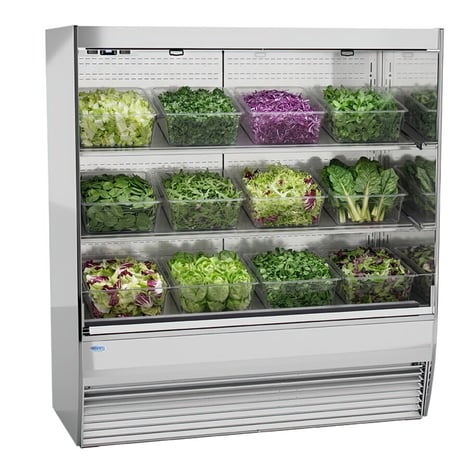

Traulsen expanded its C-Series with a new lineup of compact refrigerated prep tables and mega tops designed for commercial kitchens, featuring space-saving flat lift-up lids that simplify access and cleaning. The range targets operations where footprint efficiency and sanitation are critical, offering low-profile prep stations that integrate refrigerated storage beneath work surfaces.
Additional features include multiple size configurations across the C-Series, all stainless-steel construction for durability and flat lids designed to reduce crevices where food debris can collect. The units also use a forced-air refrigeration system to maintain consistent temperatures throughout the cabinet and pan rail. Traulsen introduced the line to support faster prep workflows and easier sanitation routines, with the flat-lid design helping staff clean and sanitize surfaces more efficiently.
For operators, the prep tables offer improved kitchen ergonomics, better use of limited space and simplified maintenance, aligning with broader foodservice trends toward compact, hygiene-focused equipment design.
Image Credit: Traulsen
What Makes This Trend Stand Out
- Compact Hygiene-focused Equipment
- Smaller, sanitation-optimized appliances are reshaping kitchen layouts by combining footprint reduction with surfaces engineered to minimize contamination risks.
- Flat Lift-up Lid Design
- The adoption of flat, lift-up lids reduces crevices and streamlines cleaning workflows, enabling modular surfaces that can be integrated into automated sanitation systems.
- Integrated Under-counter Refrigeration
- Refrigerated storage built beneath worktops is driving new ergonomic and space-efficiency paradigms that allow densely packed kitchens to maintain consistent product temperatures.
Sectors Adopting This
- Commercial Kitchen Operators
- High-volume restaurants and institutional kitchens can leverage compact, easy-to-sanitize prep stations to reconfigure service lines and optimize labor allocation in constrained footprints.
- Foodservice Equipment Manufacturing
- Manufacturers have opportunities to innovate around materials, modularity, and refrigeration systems that prioritize cleanliness and spatial efficiency for professional buyers.
- Ghost Kitchens and Delivery Hubs
- Delivery-focused culinary operations benefit from low-profile refrigerated prep units that permit rapid assembly and turnaround within tight real-estate and throughput constraints.