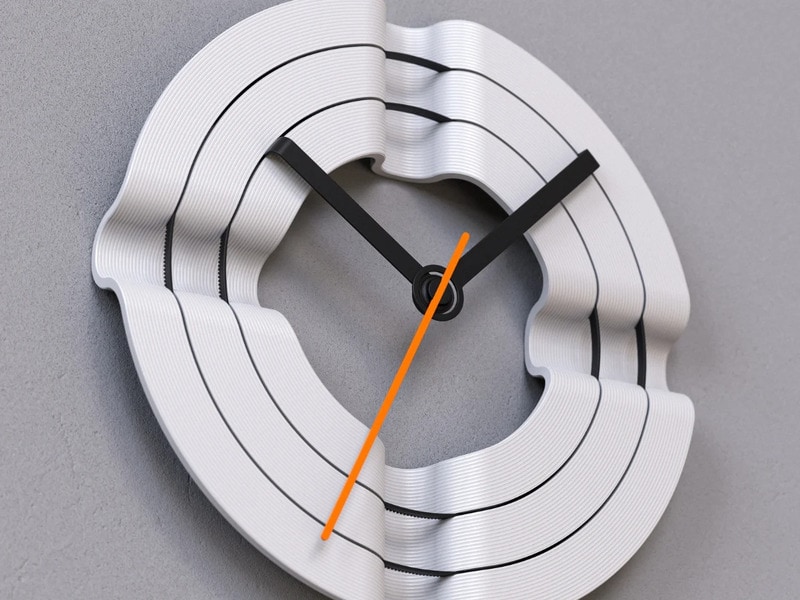
The Radius clock is a 3D-printed timepiece concept by Denis Turitsyn that tells time using concentric rings inspired by planetary orbits rather than traditional central hands. The hour and minute indicators are driven by hidden external rings that rotate around a shared axis; each ring moves at its own pace to trace hours and minutes in relation to one another, producing a kinetic, layered effect rather than a single static face. A separate, miniature motor mounted at the base of the hour hand drives the second-indicator, allowing it to operate independently without adding mechanical strain to the main system.
The clock body is produced via FDM 3D printing on a desktop machine, demonstrating accessibility through additive fabrication rather than industrial production methods. Lightweight metal alloys are used for the moving hands to reduce stress on the mechanics and ensure smoother motion over time, and dual synchronized motors balance loads to maintain precise timekeeping. The bright second hand contrasts with the sculptural white body and dark hands, making the clock both a functional timepiece and a visual study in motion and depth.
Image Credit: Denis Turitsyn
Why This Trend Is Growing
- 3d-printed Timepieces
- Additive manufacturing enables innovative timepiece designs that depart from traditional assembly methods, fostering a new era of customizable and complex clock structures.
- Kinetic Art Clocks
- Timepieces that incorporate kinetic elements as a form of art have emerged as visually captivating home decor, blending functionality with aesthetic motion.
- Precision Lightweight Engineering
- The use of lightweight alloys and dual synchronized motors in clocks exemplifies advancements in engineering precision and efficiency, offering smoother functionality and greater longevity.
Industries Being Reshaped
- Additive Manufacturing
- The integration of FDM 3D printing in consumer products heightens accessibility and personalization options for manufacturing processes across industries.
- Home Decor
- Innovative clock designs transform timekeeping into an artistic home decor element, driving new consumer interests in unique, functional art pieces.
- Precision Engineering
- The development of precise, lightweight mechanical components for timekeeping devices reflects broader trends in miniaturization and efficiency within the engineering industry.