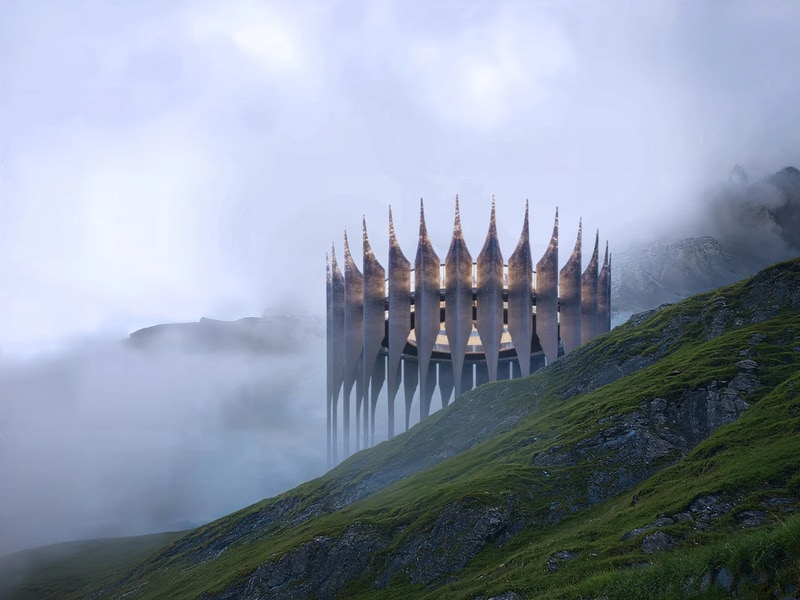
Lynx is a conceptual drone rescue station designed as an autonomous architectural network for mountain environments that combines emergency support with multipurpose civic functions. The circular stations are intended to be positioned in remote ranges such as the Alps, Pyrenees, or Carpathians, acting as hubs where rescue drones can charge, launch, and coordinate operations to locate lost or injured hikers and deliver supplies quickly. Each station is envisioned to host facilities such as observation decks, research spaces, and overnight accommodations, expanding its role beyond purely technical infrastructure.
The design uses a composite material that blends solid concrete at its base with increasingly translucent glass inclusions toward the top, creating a form that appears to dissolve into the sky and refract light throughout the day. Integrated photovoltaic cells in the exterior skin power both drone systems and the station’s internal functions, allowing off-grid performance. Interior spaces feature panoramic glazing to connect occupants with surrounding landscapes.
Image Credit: Alina Sanina
Key Themes Behind This Trend
- Drone-based Rescue Systems
- The emergence of drone-based rescue systems offers a transformative approach to enhancing safety and response times in remote and challenging environments.
- Autonomous Infrastructure Networks
- Advances in autonomous infrastructure networks present opportunities for creating self-sustaining facilities that expand functional capabilities in isolated areas.
- Sustainable Architectural Design
- Innovations in sustainable architectural design are paving the way for energy-efficient structures that integrate with the natural landscape and operate independently from traditional power grids.
Where This Applies
- Emergency Response Technology
- The emergency response technology industry is ripe for disruption with the integration of autonomous systems that enhance search and rescue missions.
- Green Building Materials
- Green building materials industry stands to benefit from adopting composite materials that offer durability and environmental harmony in extreme conditions.
- Remote Tourism and Hospitality
- Remote tourism and hospitality sectors gain new dimensions through infrastructure that combines safety with unique experiences in off-the-beaten-path locations.