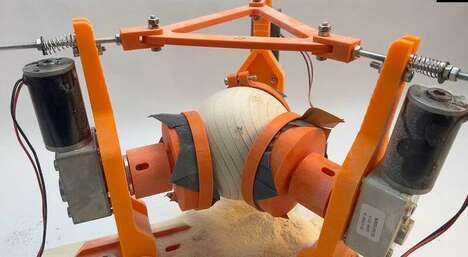
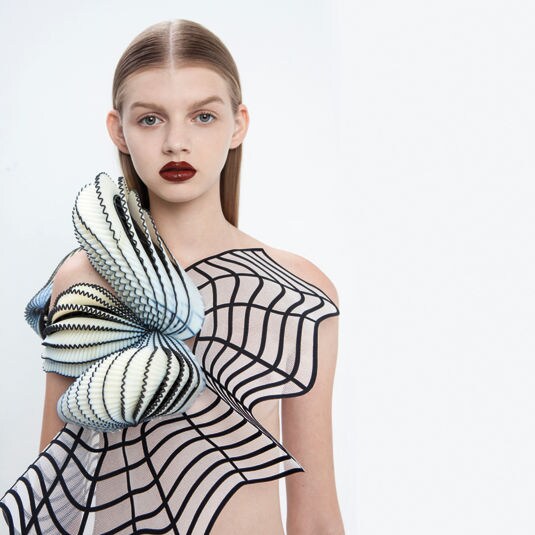
In the hopes of making an object that can only be created through a three-dimensional printer, New York City-based design studio Proxy Design has created ‘Mechaneu V1,’ a three-dimensional printed spherical gear sculpture using 3D printing.
On the process of the spherical construction, 3D modeling tools were used in conjunction with custom computer algorithms that mimic cellular growth patterns.
With the intention of exploring the physical and mechanical limits of this novel way of printing 3D sculptures, designer and partner at Proxy, Toru Hasegawa says, “[n]ature solves many problems through shape alone, using material only where needed and taking out where unnecessary. This is a strategy you find over and over again in the natural world, leading to complex geometries such as bone structures. We used this same logic on every part of the Mechaneu to create a porous object that feels completely solid.”
What Makes This Trend Stand Out
- 3D Printing Limitations
- Exploring the limits of 3D printing through intricate designs and custom algorithms presents an opportunity for disruptive innovation in manufacturing and design.
- Biomimicry in Design
- Mimicking nature's strategies in design and engineering can lead to complex and innovative geometries, inspiring new products and processes.
- Algorithmic Modeling
- Using custom computer algorithms to generate designs and sculptures can lead to unique and intricate outputs, offering possibilities for automation and optimization in manufacturing.
Sectors Adopting This
- 3D Printing Manufacturing
- Innovative approaches to 3D printing can revolutionize the manufacturing industry, allowing for more complex and efficient production processes.
- Architecture & Construction
- Biomimicry can inspire new forms and materials for building design, offering solutions for sustainable and efficient structures.
- Art & Sculpture
- Algorithmic modeling and intricate 3D printing techniques can open up new possibilities for artistic expression and experimentation.