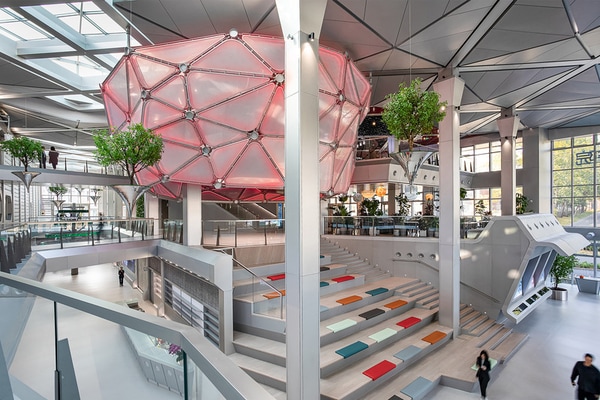
Revery Architecture's PNE Amphitheatre / Freedom Mobile Arch represents a groundbreaking fusion of architectural innovation and environmental stewardship in Vancouver's cultural landscape. The project's most striking feature is its pioneering starburst mass timber roof, which at 105-meter spans will become the world's largest free-span structure of its kind. This ambitious canopy, composed of intersecting glulam arches and CLT decking, serves multiple functions — it provides weather protection, enhances acoustic performance, and frames panoramic views of the North Shore Mountains. The design decisions employed by Revery Architecture also dramatically reduce the project's carbon footprint through biogenic material sequestration.
The PNE Amphitheatre design thoughtfully addresses its urban context with noise mitigation strategies and accessibility features targeting Rick Hansen Gold certification. As Vancouver's first net-zero carbon cultural facility, the project incorporates renewable hydroelectric power, advanced stormwater management systems, and Salmon-Safe ecological protocols.
Image Credit: Ellis Don
Key Themes Behind This Trend
- Mass Timber Architecture
- Mass timber architecture is redefining large-scale design projects by enabling the creation of expansive free-span structures with reduced environmental impact.
- Sustainable Urban Amphitheatres
- Urban amphitheatres with net-zero carbon footprints are integrating renewable energy and stormwater systems to tackle both ecological and acoustic challenges.
- Multi-functional Architectural Canopies
- Architectural canopies are evolving to enhance utility by improving weather resistance and acoustic quality while also complementing scenic surroundings.
Where This Applies
- Green Building Materials
- The use of sustainable materials like glulam frames and CLT decking is transforming the green building materials industry by focusing on carbon reduction and environmental stewardship.
- Renewable Energy Integration
- Cultural facilities are increasingly incorporating renewable energy sources such as hydroelectric power to achieve net-zero carbon status, reshaping facility management standards.
- Ecological Architecture
- Ecological architecture is gaining traction through the adoption of Salmon-Safe protocols and eco-focused design strategies that prioritize overall environmental health.