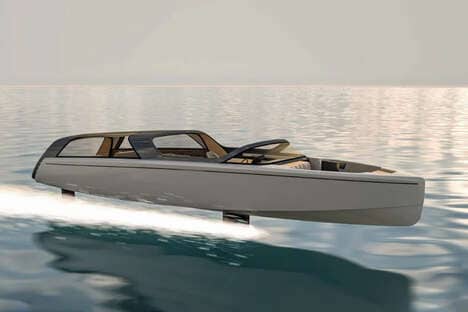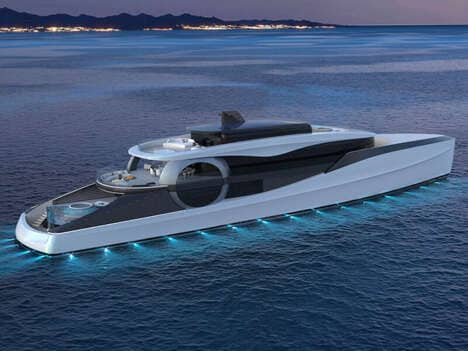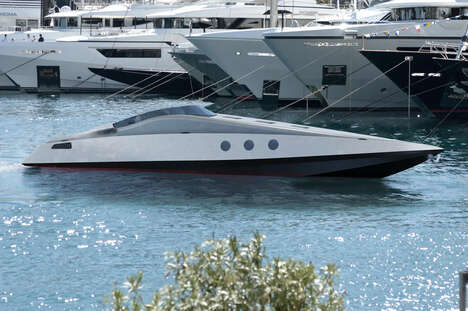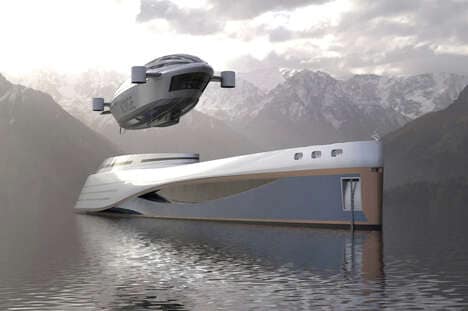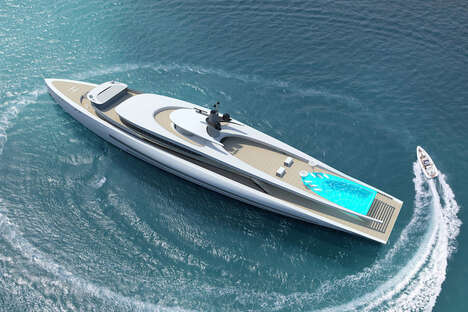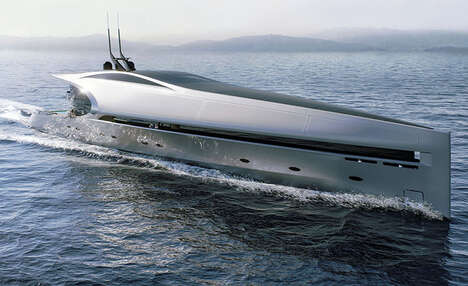
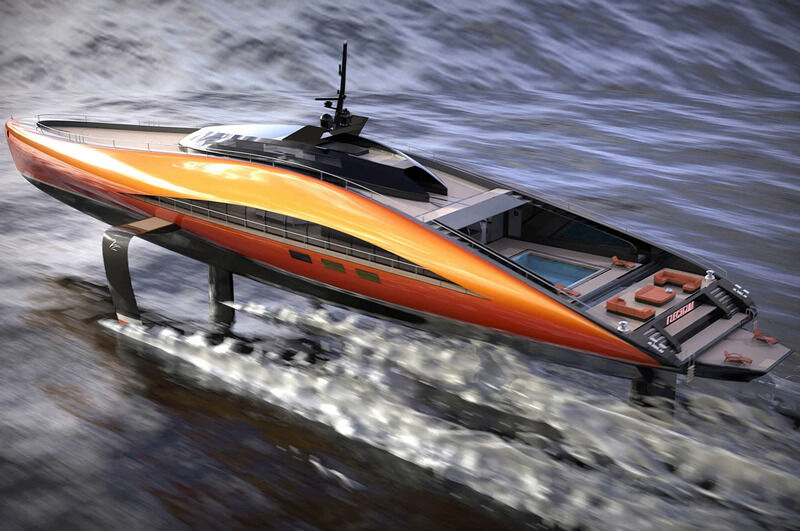
The 'Plectrum' superyacht has been conceptualized by the Lazzarini Design Studio as a futuristic vessel that prioritizes advanced materials and technologies to achieve a new kind of experience on the water.
The superyacht comes in at 74-meters in length and is imagined with a carbon fiber composite material for the hull to keep the dry weight of the vessel as low as possible. The hydrogen-powered motors are capable of producing 15,000-horsepower to achieve a top speed of 75-knots. This is thanks to the adjustable hydrofoil beams that measure in at 15-meters when anchored and will extend to 20-meters to help the vessel glide above the surface of the water.
The 'Plectrum' superyacht is also imagined with a helicopter hangar as well as central and rear garages.
What's Driving This Trend
- Hydrofoil Superyachts
- There is an opportunity for advanced materials and technologies to be prioritized in the development of hydrofoil Superyachts
- Carbon Fiber Composite Materials
- Carbon Fiber Composite Materials can be leveraged to decrease the weight of Superyachts, enabling faster speeds and better performance on the water.
- Hydrogen-powered Motors
- Hydrogen-Powered Motors can be used to achieve higher speeds in Superyachts, this green technology can have a significant disruptive effect on the overall maritime industry.
Who This Affects Most
- Maritime Industry
- The Maritime Industry can take advantage of these innovations in Superyacht design and hydrofoil technologies to create faster and more fuel-efficient vessels.
- Advanced Materials Industry
- There is a growing demand for advanced materials in the development of Superyachts and other recreational vessels, providing an opportunity for the Advanced Materials Industry.
- Green Technology Industry
- Superyacht manufacturers can introduce green technologies like hydrogen-powered motors and other renewable alternatives, marking an opportunity for the Green Technology industry to penetrate the maritime industry.