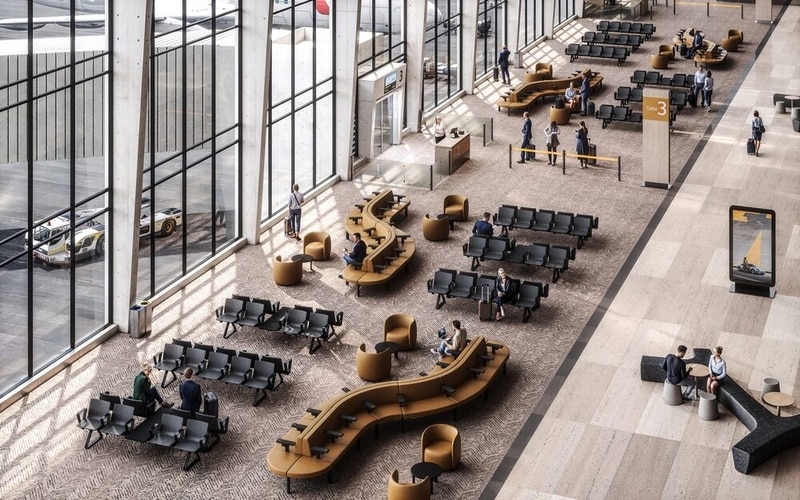
The Platform seating by Derlot is a beam-based seating system designed for high-traffic environments such as airports, stations, and public terminals. Australian brand Derlot develops the system as a modular framework, allowing multiple seating units, tables, and accessories to be arranged along a shared structural beam. The configuration can be adapted to different layouts, supporting linear, curved, and multi-directional arrangements depending on spatial requirements.
The system includes interchangeable components such as upholstered or mesh seats, integrated tables, armrests, and optional power or charging modules. Frames are typically constructed from powder-coated steel, with seating elements available in a range of finishes and materials suited to commercial use. Modules connect to a central support structure, enabling reconfiguration or expansion without replacing the full system. The Platform seating is designed for durability and long-term use in public interiors, with options tailored to different scales and seating densities.
Image Credit: Derlot
Key Themes Behind This Trend
- Modular Public Seating
- A shift toward interchangeable seating modules enables venues to reconfigure capacity and amenities without full system replacement, presenting opportunities for scalable service models.
- Integrated Power Modules
- The inclusion of built-in charging and power accessories reflects rising demand for connected infrastructure and creates scope for embedded electronics and energy management add-ons.
- Configurable Beam-based Systems
- Shared structural beams that support varied seating, tables, and accessories allow for non-permanent spatial adaptations, opening possibilities for rentable or subscription-based furnishings.
Where This Applies
- Airport and Transit Authority
- High-traffic terminals that require durable, reconfigurable seating could leverage modular beam systems to optimize passenger flow and seating density across evolving layouts.
- Commercial Interior Design
- Design firms focused on public and corporate spaces may utilize modular frameworks to offer clients adaptable aesthetic and functional solutions that extend lifecycle value.
- Healthcare Facility Management
- Hospitals and clinics with fluctuating waiting-area needs might benefit from configurable seating that supports infection control, comfort variations, and integrated power for medical devices.