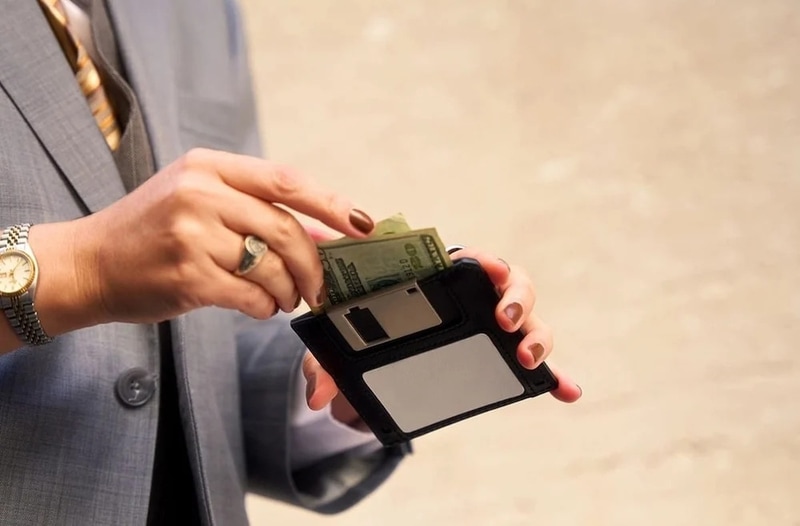
The Floppy Disk Wallet by Nik Bentel Studio is reissued through a collaboration with BEAMS, translating the form of a 3.5-inch floppy disk into a functional leather accessory. Brooklyn-based design studio Nik Bentel Studio replicates the original square format, label window, and hardware detailing, while Japanese retailer BEAMS distributes the piece through its design-focused bPr line. The wallet maintains the proportions and visual cues of the original storage object, making it immediately recognizable.
The leather replaces the original plastic casing, introducing a softer structure while retaining the rigid silhouette. The interior is reduced to a single compartment sized for folded bills and cards, alongside a metal component that functions as a money clip. The wallet is available in black, beige, and orange finishes, with subtle metallic accents integrated into the design.
Image Credit: BEAMS
What Makes This Trend Stand Out
- Nostalgic-tech Aesthetic
- Reworking iconic legacy hardware into wearable designs creates emotional value that can redefine premium product narratives.
- Material Reinvention
- Leather and other luxury materials replacing original industrial plastics suggests new product categories that blend tactile refinement with retro form factors.
- Miniaturized Iconography
- Shrinking recognizable objects into compact, functional accessories enables novel brand extensions and collectible-driven business models.
Sectors Adopting This
- Fashion Accessories
- Design-led accessories that reference obsolete technology can disrupt price and desirability signals within the accessory market.
- Retail Collaboration Platforms
- Curated partnerships between designers and specialty retailers present opportunities to create limited-edition drops that shift consumer expectations around scarcity and storytelling.
- Heritage Tech Merchandise
- Brands reviving retro electronics imagery for lifestyle products have the potential to monetize nostalgia across licensing, merchandising, and collector communities.