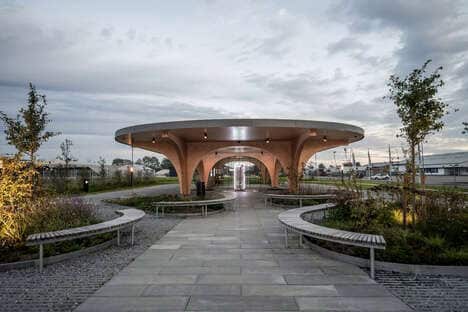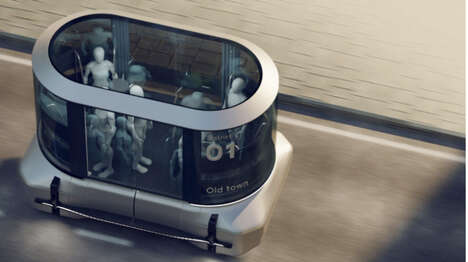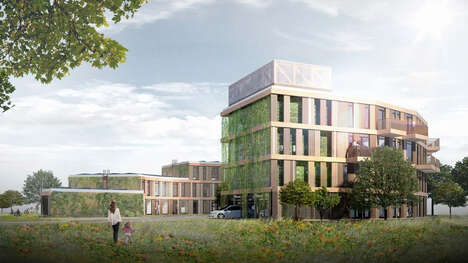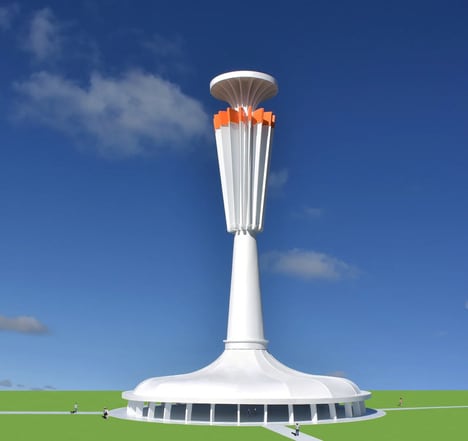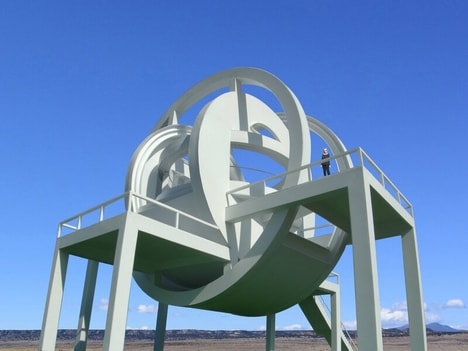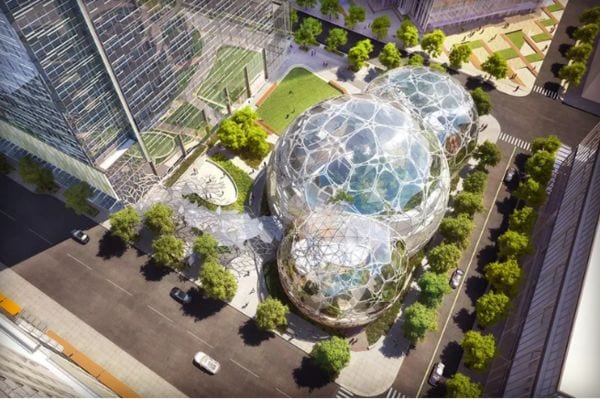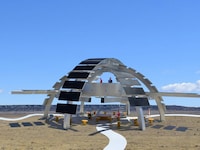
Belgrade has one of the largest trolleybus infrastructures in Europe, which spans the entire city. This project is a design for a combined trolleybus terminal and public garden; the building uses piezoelectric cells positioned within the main body of the helix structure to generate electrical energy. When subjected to mechanical strain, this vibrational-energy harvesting uses the displacement of piezoelectric crystals which are deformed by wind, pressure exerted from trolleybus pulses and kinetic movement from the overhead infrastructure wires to generate a current. The piezoelectric cells are stacked within the terminal's folded cross section, further increasing the vibration within the structure. A cluster of conducting wires are suspended from the terminal's helix frame, and they connect directly to the overhead trolleybus wire infrastructure which serves the entire city. These wires create a breathing atrium that reverberates with wind and rain, amplifying the electrical output from the building. The architecture has become part of the infrastructure.
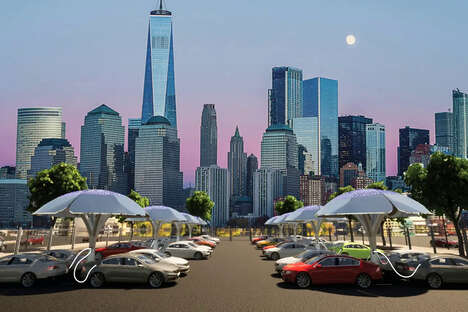
The design generates enough electrical output for street lighting and Internet WiFi access to immediate neighborhoods. The building is an active adaptive power port through which commuters will be able to charge mobiles, laptops and smart cars at these trolleybus station gardens. The generated electric current will be used to stimulate plant roots for plant growth within the main body of the structure, and the park next to the terminal has its own irrigation and sprinklers powered by the trolleybus terminal.
The project follows the Piezoelectric playground designed in 2008 for the Piorinski Park, Belgrade. The architecture advocates a dialogue between architectural form, geometry, sustainability and smart materials as an inherent part of the design process, dictating the terms of the architectural design criteria rather than referring to sustainable technology as a polite afterthought.
What's Driving This Trend
- Piezoelectric Architecture
- Opportunity for integrating piezoelectric cells into architectural designs to generate electrical energy.
- Self-powered Infrastructure
- Potential for creating self-powered infrastructure by utilizing renewable energy sources.
- Smart Material Integration
- Trend of incorporating smart materials into architectural designs for enhanced sustainability and energy efficiency.
Who This Affects Most
- Architecture
- Application of piezoelectric architecture in the design and construction industry.
- Renewable Energy
- Integration of renewable energy sources into infrastructure development and energy production.
- Smart City Solutions
- Development of innovative technologies and designs for sustainable and energy-efficient urban environments.