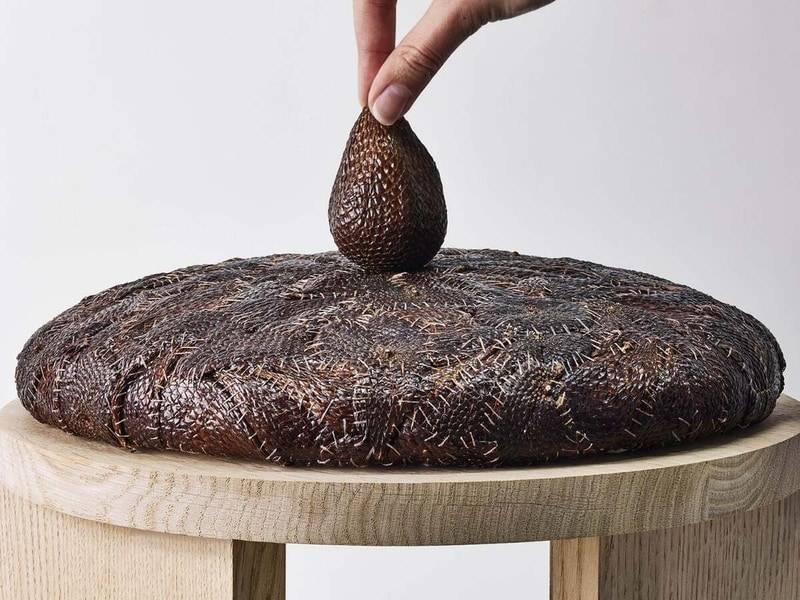
PEEL is a biodegradable textile developed by designer Anthony Guevara using discarded salak and lychee skins. The material is produced without adhesives, synthetic polymers, or toxic chemical treatments, creating an alternative to animal leather and petroleum-based vegan materials.
Fruit skins are collected after consumption and dried using a controlled low-heat process that preserves their natural structure and flexibility. The peels are then treated with naturally derived substances to improve durability and water resistance before being stitched onto biodegradable backing materials such as cotton muslin and linen.
The textile retains the colour, texture, and surface patterns of the original fruit skins rather than processing them into uniform sheets. Development began with salak peels and later expanded to lychee and four additional tropical fruit varieties. More than 50 material tests were conducted to refine flexibility and durability.
Image Credit: Nefeli Vitoraki
What's Driving This Trend
- Fruit Waste Textiles
- Discarded fruit skins are emerging as visible, biodegradable surface materials that preserve natural texture while reducing reliance on animal leather and petroleum-based synthetics.
- Adhesive-free Biomaterials
- Materials produced without synthetic binders or toxic treatments create opportunities for cleaner fabrication systems with lower environmental and regulatory burdens.
- Texture-retaining Design
- Natural color variation, peel patterning, and organic irregularity introduce premium aesthetic value into sustainable products that avoid the uniformity of conventional biomaterials.
Who This Affects Most
- Sustainable Fashion
- Biodegradable fruit-skin textiles expand the material palette for apparel, accessories, and footwear brands seeking distinct alternatives to leather and plastic-based vegan substitutes.
- Agricultural Waste Management
- Post-consumption fruit peel collection gives food systems a higher-value pathway for organic byproducts that are typically composted, discarded, or underutilized.
- Interior Materials
- Flexible plant-based surfaces backed with cotton or linen suggest new possibilities for low-impact upholstery, wall coverings, and decorative finishes with natural visual character.