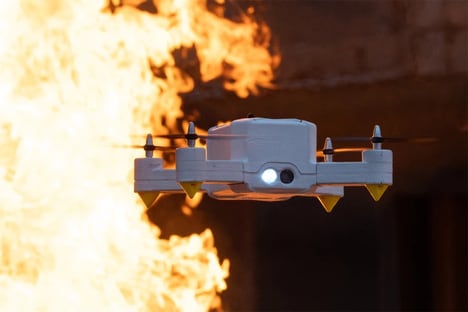
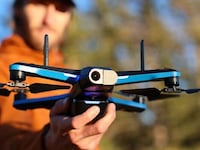
KATSU worked with Tsuru Robotics to launch the first partially autonomous painting drone. The company has a history of implementing new technologies in the painting industry, as well as drone technology. The partially autonomous painting drone is titled the ‘KATSURU BETA,’ and it is currently available for pre-order until January 1st, 2020.
The painting drone is able to be controlled manually, but it is also able to use its various sensors and software to detect potential obstacles. The drone has a battery that lasts for 10 minutes of flight, and it can paint walls at extremely high altitudes. The company also stated that the drone will be upgraded before the end of 2020, and it will have a ‘full vision kit.’
Image Credit: Katsu
Why This Trend Is Growing
- Partially Autonomous Painting Drones
- The development of partially autonomous painting drones represents an opportunity for companies to explore new possibilities in the painting industry, especially in terms of increased speed and efficiency.
- Drone-mounted Sensors and Software
- The integration of drone-mounted sensors and software into various industries can improve productivity and safety while reducing costs.
- Upgradable Drone Technology
- The ability to easily upgrade drone technology will become increasingly important as more companies utilize them for a wide range of purposes.
Industries Being Reshaped
- Construction
- The construction industry can benefit from the use of painting drones, as they can be used to paint high and hard-to-reach areas more quickly and safely than manual labor.
- Manufacturing
- Drone-mounted sensors and software can improve quality control and increase productivity in the manufacturing industry.
- Agriculture
- Upgradable drone technology can be used for precision agriculture, allowing for more efficient and accurate crop monitoring and management.