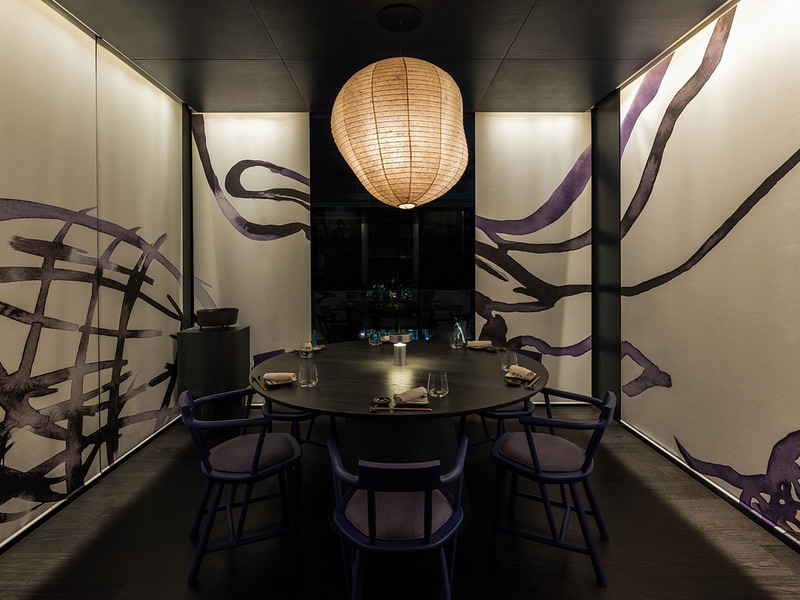
Onuki Restaurant is a new hospitality project by Yabu Pushelberg located within the Ilisian development in Athens. The restaurant draws from both Japanese and Greek design references through a layered interior of dark wood, limestone, indigo accents, mirrored surfaces, and patterned tilework.
Guests enter through spaces defined by geometric lighting, decorative screens, and sculptural ceiling installations that guide movement from the dining room to the open kitchen, poolside terrace, and upper-level private dining areas. The design balances contemporary detailing with materials and motifs associated with both cultures.
The venue is led by chef and co-owner Stamatis Skriapas, whose menu interprets Japanese dishes using ingredients sourced from the Athens region. Terracotta tile surfaces wrap the bar and contrast with darker finishes used throughout the restaurant. Large pendant fixtures, custom murals, and textured partitions contribute to the spatial composition.
Image Credit: Onuki, Giorgos Sfakianakis.
What Makes This Trend Stand Out
- Japanese-greek Fusion Dining
- The combination of Japanese culinary formats with Greek regional ingredients signals new potential for localized fine dining concepts that feel both globally familiar and culturally specific.
- Layered Cultural Interiors
- Restaurants with blended material palettes, heritage motifs, and contemporary spatial sequencing create differentiated environments where design becomes a core part of the dining experience.
- Regional Ingredient Reinterpretation
- Local sourcing applied to international cuisine reveals opportunities for menus that reduce dependency on imported authenticity while building stronger connections to place.
Sectors Adopting This
- Fine Dining
- High-end restaurants are increasingly defined by hybrid culinary identities, opening space for destination venues that merge technique, storytelling, and regional supply networks.
- Hospitality Design
- Interior design studios are shaping competitive advantage through immersive cross-cultural spaces that translate cuisine, movement, and atmosphere into a unified guest journey.
- Culinary Tourism
- Travel-driven dining experiences rooted in both local context and international influence support new hospitality models centered on cultural discovery and design-led destination appeal.