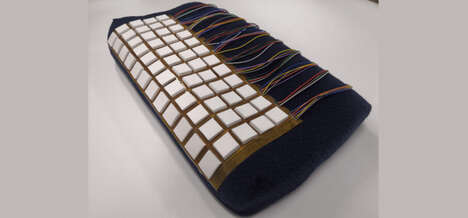
Developed for the Defense Advanced Research Projects Agency (DARPA), these novel sensors are simultaneously dormant and always awake, becoming alert only when in the presence of a so-called signal of interest. DARPA believes this could enhance situational awareness for war-fighters.
Adding to the Internet of Things (IoT), the novel sensors are capable of sleeping for years in between active periods. They are still able to detect events despite "using virtually zero standby power" and not needing a battery top-up thanks to DARPA's Near Zero Power RF and Sensor Operation. Northwestern engineers worked on the sensors and referred to them as "a plasmonically-enhanced micromechanical photoswitch." The technology behind the tiny sensors was published recently in a Nature Nanotechnology paper.
What Makes This Trend Stand Out
- Dormant Sensors
- Opportunity for disruptive innovation by developing sensors that can stay dormant for long periods of time, conserving power while still remaining alert.
- Near Zero Power RF
- Opportunity for disruptive innovation by creating RF and sensor operation technologies that use virtually zero standby power, eliminating the need for frequent battery top-ups.
- Plasmonically-enhanced Micromechanical Photoswitch
- Opportunity for disruptive innovation by exploring plasmonically-enhanced micromechanical photoswitches, which can enhance situational awareness for various industries.
Sectors Adopting This
- Defense
- Disruptive innovation opportunity for the defense industry by implementing dormant sensors for enhanced situational awareness for war-fighters.
- Iot
- Opportunity for disruptive innovation in the IoT industry by integrating near zero power RF and sensor operation technologies into IoT devices, enabling long-lasting battery life.
- Engineering
- Disruptive innovation opportunity for the engineering industry by researching and developing plasmonically-enhanced micromechanical photoswitches for improved sensing capabilities.