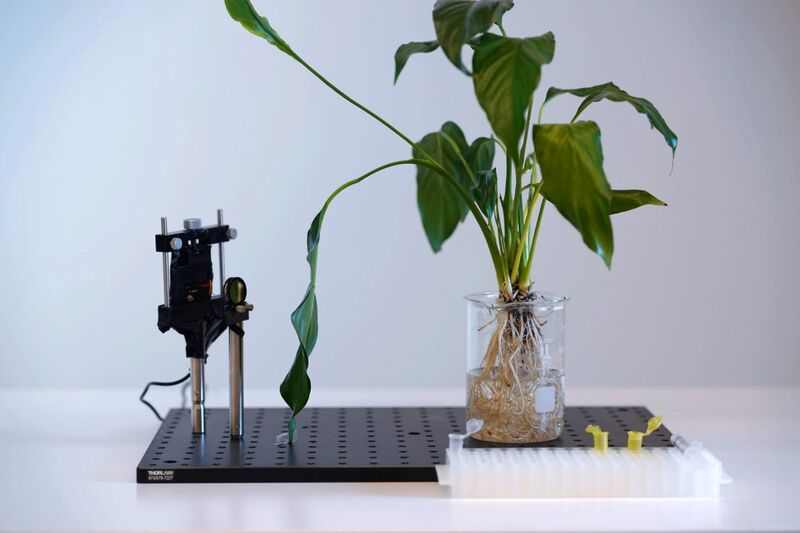
In the digital age—where technological innovation has accelerated drastically—the existence of a bionic plant does not seem like an outlandish concept. In fact, it isn't. Harpreet Sareen, a graduate of the highly regarded MIT Media Lab, has succeeded in developing a bionic plant that can "instantly detect irregularities in water quality, catching them long before they become a problem for residents in the neighborhood or district."
Dubbed 'Argus,' the innovation is inspired by the Flint Water Crisis. Sareen developed a specialized mixture of nano-sensing materials (more precisely of DNA-based biosensors and carbon nanotubes) and injected them into a plant. When impurities or toxins are detected, the nano-sensing materials produce fluorescent signals that can be detected with an affordable camera setup. Thus, the bionic plant becomes an efficient, electricity-free system for monitoring water.
Image Credit: Yanko Design
Key Themes Behind This Trend
- Bionic Plants
- The development of bionic plants infused with nanosensors represents an innovative approach to monitor water quality and detect toxins in real-time.
- Nanosensors
- The use of DNA-based biosensors and carbon nanotubes in the creation of nanosensors represents a cutting-edge technology with vast potential in various industries.
- Fluorescent Signals
- The application of fluorescent signals technology in the detection of impurities or toxins offers disruptive innovation opportunities in various fields, including healthcare and food safety.
Where This Applies
- Environmental Monitoring
- The use of bionic plants with nanosensors presents disruptive innovation opportunities for environmental monitoring and conservation efforts.
- Healthcare
- The use of nanosensors and fluorescent signals technology can drive significant disruption in the healthcare sector, allowing for faster and low-cost detection of diseases and infections.
- Food Safety
- The incorporation of nanosensors in food safety checks could revolutionize the industry, enhancing traceability and improving supply chain management.