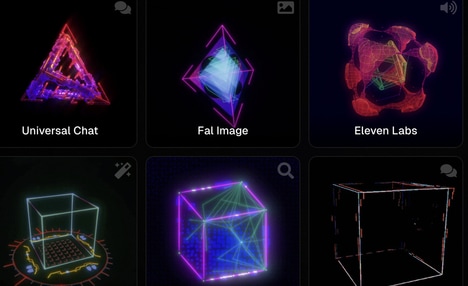
Tripo AI added 'Agentic Canvas,' a visual, node-based 3D workflow builder that lets users inspect, edit and reuse AI-generated steps instead of rebuilding each asset from scratch. The system turns ideas, reference images and existing files into connected 3D production flows through a canvas that links generation, refinement and export.
Users can save those workflows, duplicate them and batch process multiple assets, making the same setup easier to repeat across projects. The platform includes an 'AI 3D Lab' node for conversational inspection and refinement, so changes can happen inside the workflow rather than in separate tools. That structure suits teams needing consistent output across game assets or printable models without starting over.
Tripo AI shows how visual control and reusable workflows can widen its reach beyond one-off 3D generation and toward repeatable production pipelines, making generative 3D easier to scale across creative and commercial uses.
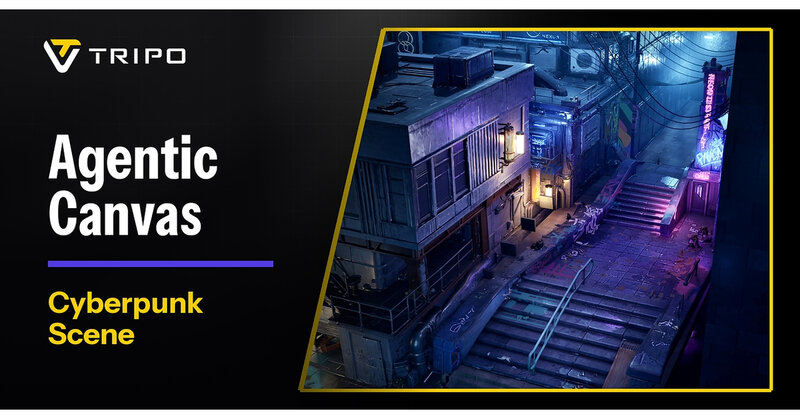
Image Credit: Tripo Agentic Canvas
What Makes This Trend Stand Out
- Node-based Creation
- Visual workflow canvases bring greater transparency to generative 3D production, revealing space for scalable tools that standardize complex creative processes.
- Reusable AI Pipelines
- Saved and duplicable asset workflows signal a shift toward repeatable generative systems that reduce friction across high-volume content production.
- Conversational 3D Refinement
- Embedded chat-based inspection within production flows creates potential for more intuitive editing experiences that merge feedback, iteration and output control.
Sectors Adopting This
- 3D Design Software
- Software platforms can evolve from standalone generation tools into end-to-end production environments that support repeatable asset creation.
- Gaming
- Game studios benefit from consistent asset pipelines that enable faster creation of reusable environments, props and character components.
- Additive Manufacturing
- Printable model production gains efficiency from structured AI workflows that preserve design logic across batches and customized outputs.