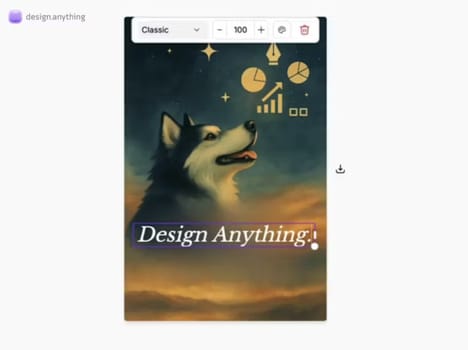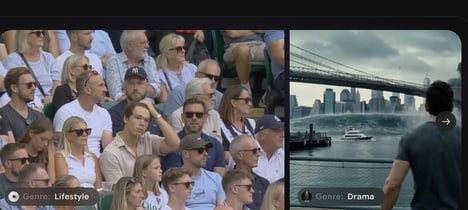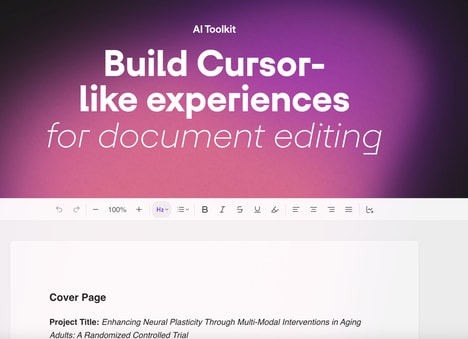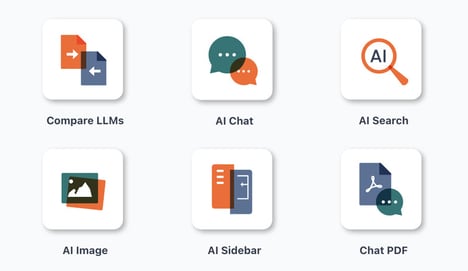
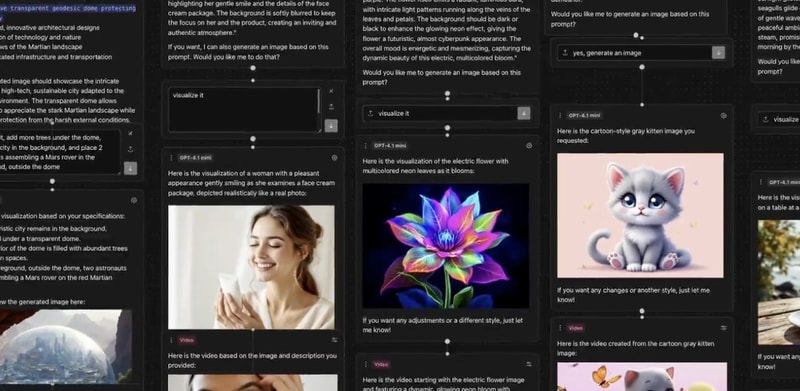
Working with multiple AI tools often means juggling tabs, switching platforms, and moving content between different applications -- Tila AI is a visual workspace designed to unify these workflows by bringing multiple AI capabilities into a single environment.
The platform supports a range of leading AI models for text generation, image creation, coding, research, and multimedia production. Users can work with tools such as GPT-4, DALL·E, Kling, Luma, and others without leaving the same workspace.
Tila is built for complex, multimodal projects that combine different forms of content and workflows. Whether users are writing, designing, researching, prototyping, or generating media, they can organize and develop ideas within one shared canvas. It provides a centralized space where ideas, assets, and AI-powered tools can work together throughout the entire project lifecycle.
Image Credit: Tila AI
Key Themes Behind This Trend
- Unified AI Canvases
- Centralized visual workspaces reduce tool fragmentation by combining writing, design, coding, search, and media generation into one project environment.
- Multimodal Project Orchestration
- Complex creative workflows gain new value from systems that coordinate text, images, video, code, and research assets across a shared interface.
- Model-agnostic Creation Platforms
- Flexible access to multiple AI models within a single workspace creates differentiation through choice, interoperability, and workflow continuity.
Where This Applies
- Creative Software
- Design and production platforms are evolving toward integrated AI environments where ideation, asset generation, and editing coexist on one canvas.
- Enterprise Productivity
- Knowledge work is being reshaped by collaborative AI hubs that consolidate research, drafting, prototyping, and content management for cross-functional teams.
- Digital Media Production
- Media creation benefits from multimodal AI workspaces that streamline the development of visuals, video, copy, and interactive prototypes in unified pipelines.