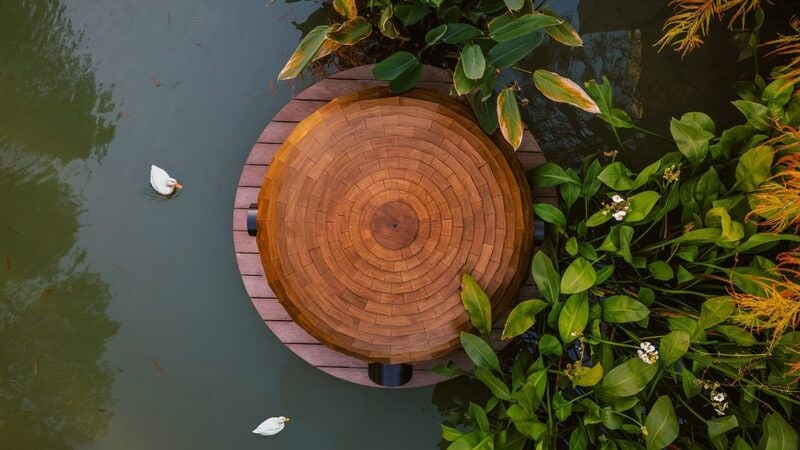
The Nesting Plan VI Call Duck combines habitat design and architectural sculpture in four floating wooden huts created by Cheng Tsung FENG for call ducks living in a pond at Swiio Villa Yilan in Taiwan. Each hut is made from overlapping slanted wooden shingles framing circular windows, offering shelter from wind and rain while allowing airflow and visibility. Sizes and forms vary, so ducks can choose settings that suit their comfort.
The design process began with a prototype placed on the pond so villa staff could observe how the ducks interacted, leading to refinements including buoyancy adjustments and window height. Automatic lighting activates during cooler months to offer warmth as dusk falls. With materials like wood and metal, the huts resist weather while echoing natural textures. By respecting animal behaviour, environment, and form, Nesting Plan VI Call Duck becomes both a useful infrastructure and a poetic installation.
Image Credit: Fixer Photographic Studio
What Makes This Trend Stand Out
- Eco-friendly Animal Habitats
- Eco-friendly installations that serve dual purposes as both animal habitats and artistic expressions present novel opportunities within wildlife conservation.
- Modular and Adaptable Shelter Design
- Modular designs allowing variability in size and form introduce adaptability to diverse environmental settings for animal comfort and protection.
- Smart Climate-responsive Housing
- Integrating automated climate-responsive features such as lighting in shelters showcases advancements in smart architecture for animal wellbeing.
Sectors Adopting This
- Wildlife Conservation
- Innovative design principles that accommodate animal behavior and environmental interaction redefine infrastructure within the wildlife conservation sector.
- Sustainable Architecture
- The blend of natural aesthetics and durable materials in these shelters exemplifies a forward-thinking approach to sustainable architectural design.
- Smart Home Technology
- The inclusion of automated climate features in animal habitats parallels developments in smart home technology, emphasizing adaptive environmental control.