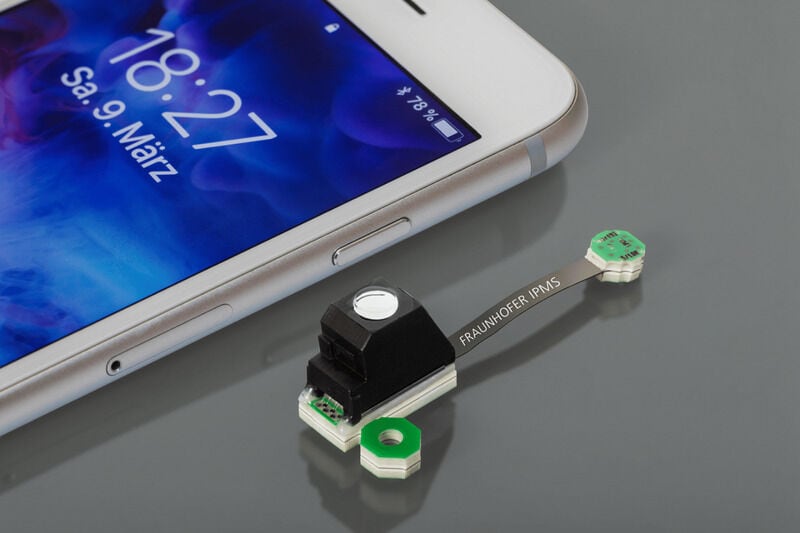
This near-infrared spectroscopy system has been created by researchers at Fraunhofer IPMS as a device capable of deciphering what kind of material is used as the composition for a fabric.
The spectrograph works by analyzing the light reflected from fibers, splitting them into wavelengths that measure between 950 and 1,900 nanometers before turning them into electric signals. These signals are then fed into an artificial intelligence (AI)-powered analyzer to quickly decipher what the materials are in a fabric. This could be used in fabric recycling facilities to better aid the sorting process and more.
The near-infrared spectroscopy system measures in at just 10mm in size and holds strong merit as the basis for future sensors that could be integrated into appliances or additional processing facilities.
Image Credit: Fraunhofer IPMS
What's Driving This Trend
- Fabric Analysis Technology
- Using near-infrared spectroscopy, this technology can quickly decipher the composition of fabric, paving the way for more efficient sorting processes.
- AI-powered Analyzers
- The integration of artificial intelligence in fabric analysis allows for fast and accurate identification of materials, enhancing recycling facilities and sorting processes.
- Miniaturized Spectrograph
- The compact size of this near-infrared spectroscopy system opens up opportunities for integration into appliances and processing facilities, revolutionizing fabric analysis.
Who This Affects Most
- Textile Recycling
- The fabric analysis technology can help textile recycling facilities improve their sorting processes, optimizing resource utilization.
- Smart Appliance Manufacturing
- The miniaturized spectrograph offers potential in smart appliance manufacturing, enabling devices to accurately analyze fabric compositions for optimal performance.
- Fabric Manufacturing
- AI-powered analyzers in fabric manufacturing can streamline quality control processes, ensuring accurate material composition and enhancing product development.