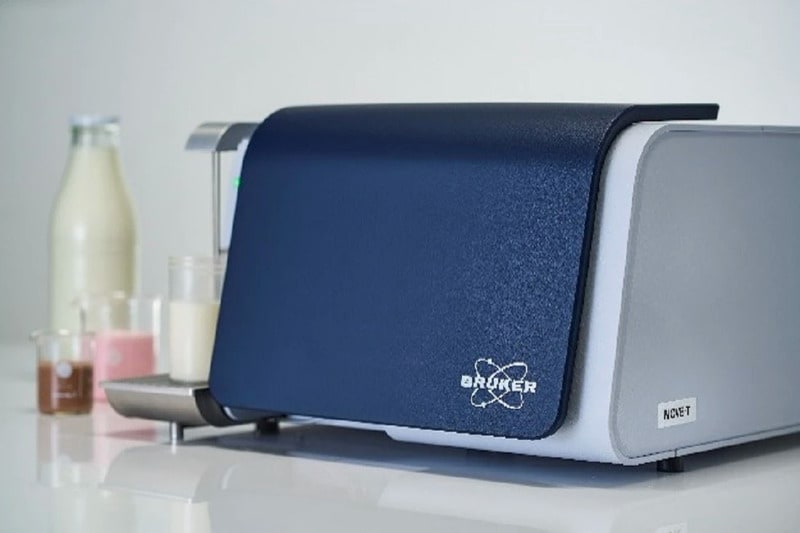
The Bruker MOVE-T liquid dairy analyzer has been announced by the brand as a new solution for the dairy production industry that's engineered to help improve overall quality and efficiency. The system utilizes Fourier Transform Near-Infrared (FT-NIR) technology for analyzing raw milk and any other kind of liquid dairy product, offering access to precise results. The unit is also suited for use with plant-based beverages and features a wear-free quartz cell that delivers results in line with the ISO 21543 (IDF 201) standards.
VP of Bruker Optics Jörg-Peter Conzen commented on the Bruker MOVE-T liquid dairy analyzer saying, "The Move-T reflects our dedication and our commitment to innovation and analytical excellence. By providing the dairy industry with cutting-edge NIR technology, we are helping our customers achieve greater efficiency and product consistency. This launch completes our proven portfolio of dairy FT-NIR analysers for lab and process control."
What Makes This Trend Stand Out
- Precision Dairy Analysis
- Advanced analytical technologies like FT-NIR allow for unprecedented precision in assessing the composition of dairy products, enabling producers to optimize quality control and product consistency.
- Plant-based Beverage Testing
- The integration of FT-NIR technology in analyzing plant-based drinks offers opportunities to meet the growing demand for non-dairy alternatives with the same level of quality and consistency as traditional dairy products.
- Standardized Testing Solutions
- The Move-T's alignment with international standards like ISO 21543 underscores a shift towards globally consistent testing protocols in the dairy industry, which can facilitate international trade and product trust.
Sectors Adopting This
- Dairy Manufacturing
- Incorporating cutting-edge analysis systems like the Bruker MOVE-T into dairy manufacturing enhances production efficiency and allows for real-time quality assurance.
- Food Technology
- The development of new analytical technologies in food science, such as FT-NIR, can significantly impact food safety and innovation, driving the evolution of industry standards.
- Plant-based Food Production
- Adapting precision testing tools for use in plant-based food and beverage production opens up avenues for growth in the rapidly expanding alternative food sector.