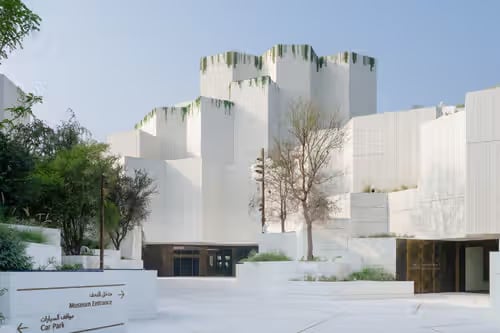
The Natural History Museum Abu Dhabi opens in Abu Dhabi’s Saadiyat Cultural District as a large-scale institution dedicated to the history of the universe, Earth, and life. The museum spans more than 35,000 square metres and presents a chronological narrative that moves from the origins of the cosmos through planetary formation, biological evolution, and present-day ecosystems. Permanent displays include a near-complete Tyrannosaurus rex skeleton known as Stan, a suspended blue whale skeleton measuring approximately 25 metres, and geological specimens that trace environmental change over deep time. Galleries are organised thematically to address planetary systems, biodiversity, and future environmental conditions, with a focus on global and regional natural history.
The building was designed by architecture firm Mecanoo and features forms inspired by natural rock formations. In addition to exhibition spaces, the museum includes research laboratories, educational facilities, and areas dedicated to scientific study. Natural History Museum Abu Dhabi forms part of a broader cluster of cultural institutions planned for Saadiyat Island.
Image Credit: Natural History Museum Abu Dhab
Why This Trend Is Growing
- Immersive Natural History Experiences
- The creation of thematic galleries that bring to life Earth's past, present, and future offers opportunities for developing multisensory, immersive experiences that engage museum visitors deeply.
- Sustainable Architectural Design
- Architecture inspired by natural rock formations demonstrates a trend toward buildings that not only house exhibits but also reflect the themes of natural history through sustainable, biomimicry-driven design.
- Educational Laboratories in Cultural Institutions
- Integrating research labs and educational facilities within museums highlights a trend of offering hands-on, interactive learning experiences that complement traditional exhibits.
Industries Being Reshaped
- Museum and Cultural Heritage
- Museums are evolving into dynamic, interactive locales providing educational and research opportunities, reflecting a trend towards personalized and immersive visitor experiences.
- Ecotourism and Environmental Education
- Natural history museums are becoming key players in promoting environmental awareness and sustainability, creating a fusion of tourism and education industries.
- Architecture and Design
- The fusion of innovative architectural design with cultural themes is creating demand for structures that physically embody their thematic narratives and offer sustainable solutions.