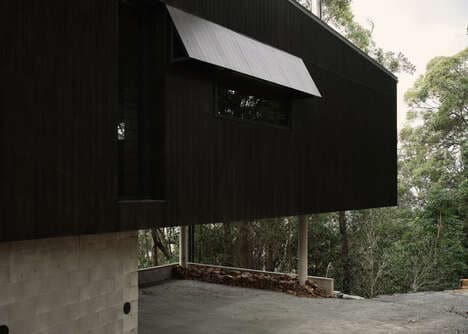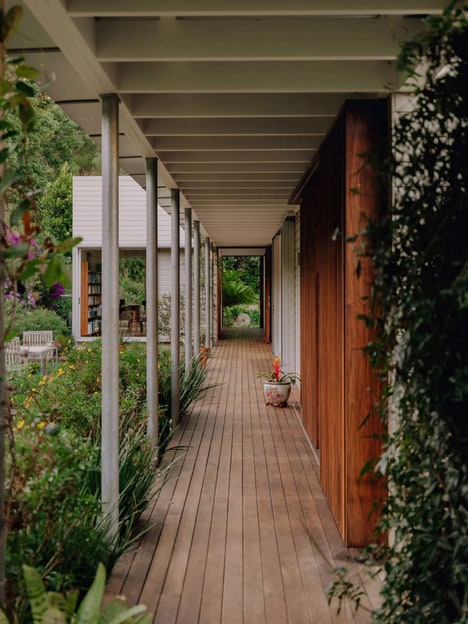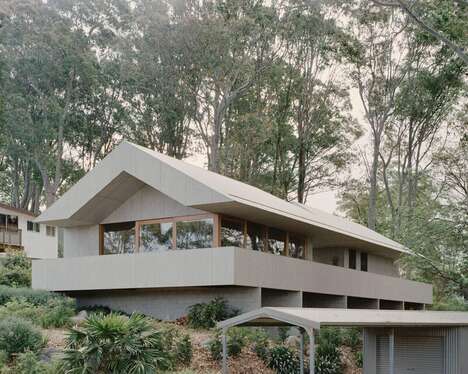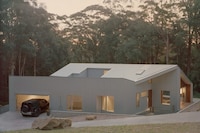


Australian studio Nielsen Jenkins built the Mt Coot-Tha House to withstand extreme conditions such as bushfires. The house sits on a challenging site due to its steep slope at the foot of the structure. The local studio designed the home in a series of low-sloping units, liked by a triple-height staircase. This is to satisfy the building requirements established by the second-highest bushfire attack level.
The durable family home boasts lush green courtyards protected from extreme fires by its high blockwork walls. Boasting a ground floor garage, a large living room, dining, and kitchen area on the first floor, Mt Coot-Tha House is complete with a designated space for the main bedrooms on the second floor,
Image Credit: Nielsen Jenkins
What's Driving This Trend
- Fireproof Building Materials
- Develop fireproof building materials for structures that can withstand extreme conditions such as bushfires and protect homes from damage.
- Eco-friendly Housing
- Design eco-friendly homes with features that allow for better resilience in extreme conditions such as high wall blocks, triple-height staircase and low-sloping units.
- Modular Housing Design
- Create modular housing designs to implement efficient and low-cost manufacturing processes for building fire-proof homes.
Who This Affects Most
- Construction Industry
- Provide solutions for durable and fire-proof building materials to the construction industry and contribute to the building of reconstruction missions.
- Insurance Industry
- Collaborate with the construction industry to insure properties that are built with fire-proof building materials.
- Real Estate Industry
- Market eco-friendly and fire-resistant properties to appeal to buyers who seek resilient and energy-efficient homes.