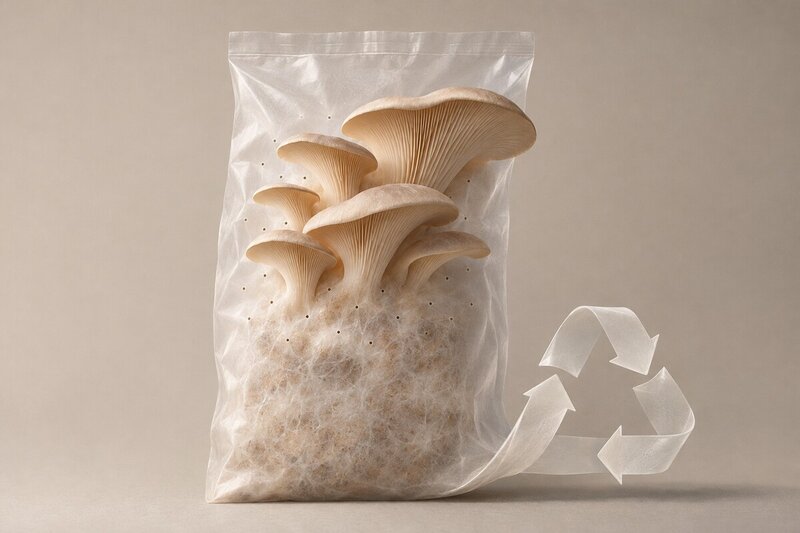
ROP-Ltd. and The Magical Forest created an Oyster mushroom grow bag that drops the usual breathable patch and uses engineered microperforations instead, giving growers a single-material format that still supports gas exchange. Developed by flexible packaging manufacturer ROP-Ltd. with boutique farm The Magical Forest, the 40-micron polypropylene bag is already in commercial use at the farm.
Its tiny holes replace the added filter section found on standard cultivation bags, so airflow and contamination control sit in one layer of plastic. Built for autoclave sterilization before inoculation, it kept contamination below 0.1% in commercial trials and then moved into regular production.
Eliminating the attached patch turns a multi-part bag into a mono-polymer one, which gives Oyster mushroom growers an easier recycling route where polypropylene collection and processing are available. The thinner film also cuts plastic use, tying reduction to a category that still needs sterile, dependable packaging.
Why This Trend Is Growing
- Mono-material Packaging
- Single-polymer formats are creating more recyclable alternatives to mixed-material agricultural and food packaging without sacrificing required performance.
- Microperforated Sterility
- Engineered microperforations are reshaping breathable packaging by combining gas exchange and contamination control within one simplified material layer.
- Low-waste Cultivation Inputs
- Thinner, recyclable grow bags point to new efficiencies in controlled-environment agriculture where sterility, material reduction, and disposal pressures intersect.
Industries Being Reshaped
- Mushroom Farming
- Commercial fungi producers are gaining access to cultivation supplies that reduce contamination risk while improving end-of-life material handling.
- Flexible Packaging
- Packaging manufacturers are finding growth in high-performance mono-polymer designs that replace added components with precision-engineered film features.
- Agricultural Technology
- Controlled growing systems are expanding demand for specialized materials that support productivity, sanitation, and sustainability in niche crop production.