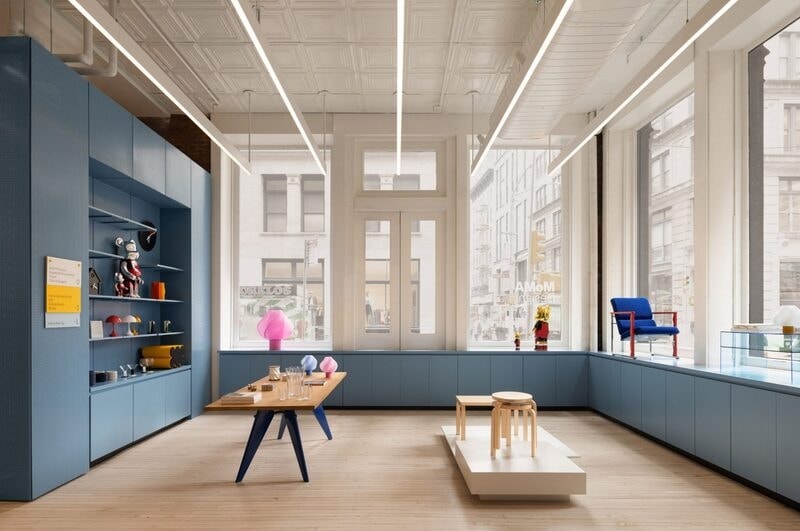
The MoMA Design Store SoHo renovation reveals historic structure with new display systems by exposing cast-iron columns, masonry walls and sections of the original tin ceiling while integrating contemporary retail fixtures. Peterson Rich Office returned the facade to black, reopened Spring Street windows and restored the 1880s circulation pattern to improve sightlines throughout the 6,600-square-foot space. Blue perforated-metal units function as both display elements and visual dividers, and matching cabinets beneath the windows raise larger products toward the street. Wooden plinths with white tops tier smaller items, while a rotating installation zone near the entrance links the retail area to ongoing museum programming.
A mural by Nina Chanel Abney anchors the north wall and establishes a dedicated surface for future site-specific works. The lower level houses books and flexible casework on casters for events and talks. The design combines restored historic craftsmanship with adaptable systems, reflecting a shift toward fluid retail layouts that emphasize access, visibility and modularity.
Image Credit: Eric Petschek
Key Themes Behind This Trend
- Historical Aesthetic Integration
- Restored historical elements like cast-iron columns and tin ceilings are being combined with modern design, offering a unique retail experience that honors architectural heritage.
- Fluid Retail Layouts
- Retail spaces are shifting toward adaptable layouts that enhance customer movement and engagement, using flexible display elements to merge shopping with experiential activities.
- Art-infused Retail Environments
- Integrating contemporary art installations into retail spaces is creating dynamic environments that engage consumers and connect them to cultural experiences.
Where This Applies
- Retail Design,
- Innovations in retail design are focusing on blending historic and modern elements, leading to spaces that are both aesthetically pleasing and functionally cutting-edge.
- Cultural Commerce
- Retail spaces are becoming cultural hubs by integrating art and museum-like installations, appealing to consumers seeking more than just products.
- Modular Furniture Manufacturing
- The need for adaptable, movable fixtures in retail spaces is driving demand for modular furniture solutions that can be easily reconfigured for various purposes.