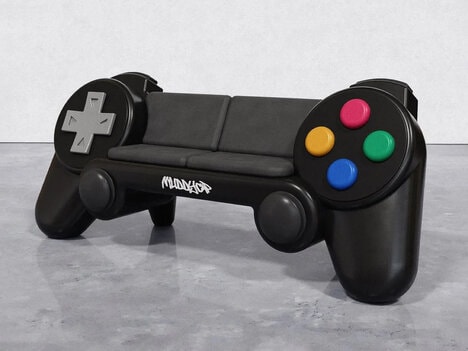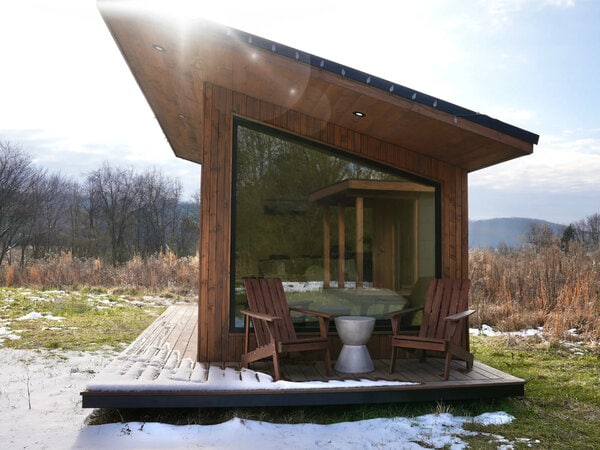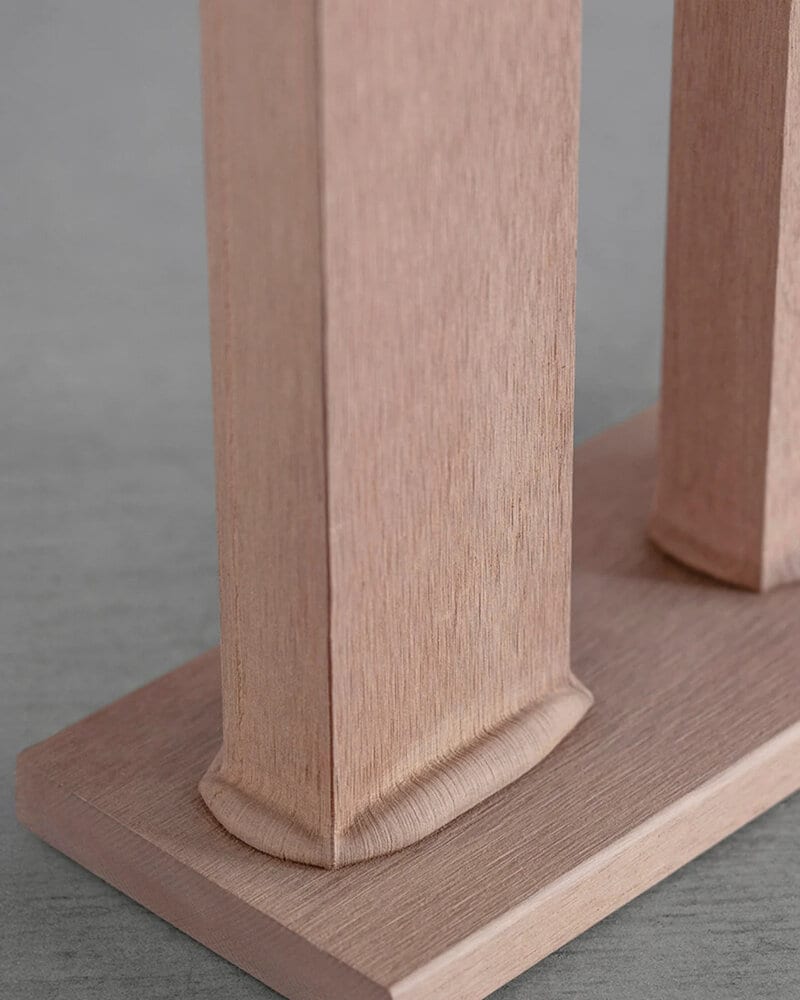
The Mocky furniture collection by Tact Inoue introduces a construction method that joins artificial wood through heat and pressure. Made from a composite of wood flour and resin commonly used in outdoor decking, the material is heated until soft before being compressed with a 20-ton press to bond individual components together. The process creates seamless joints without screws, adhesives, or traditional woodworking techniques, while producing organic textures and sculptural forms unique to each piece.
The new furniture collection embraces the natural variations created during manufacturing, with warped surfaces and fused connections becoming defining visual elements. One of the standout designs is a bench assembled from two independent sections connected entirely through the heat-fused joint, demonstrating the structural capabilities of the process.
Image Credit: Tact Inoue
Why This Trend Is Growing
- Heat-fused Construction
- Thermal bonding methods are redefining furniture assembly by replacing hardware and adhesives with seamless material fusion that supports distinctive forms and reduced component complexity.
- Composite Wood Aesthetics
- Artificial wood composites are gaining creative value as designers emphasize warped textures, irregular surfaces, and material unpredictability as premium visual features.
- Tool-less Furniture Assembly
- Manufacturing processes that eliminate screws, glue, and conventional joinery signal new possibilities for recyclable, durable, and visually unified furniture systems.
Industries Being Reshaped
- Furniture Design
- Sculptural production techniques are expanding the category beyond standardized construction toward expressive pieces shaped by material behavior and process variation.
- Advanced Materials
- Wood-flour and resin composites are moving from utilitarian decking applications into design-led products where performance, texture, and formability create new market relevance.
- Sustainable Manufacturing
- Adhesive-free and hardware-free fabrication offers a pathway to simplified material streams, potentially improving end-of-life recovery and lowering reliance on mixed fasteners.