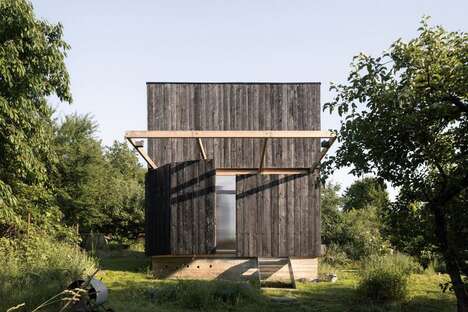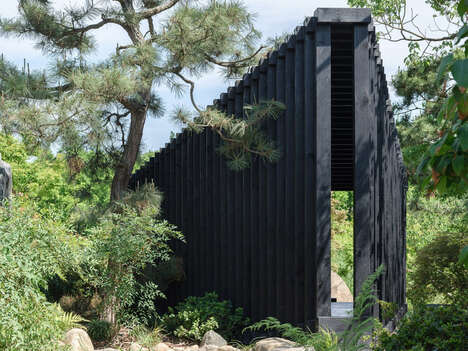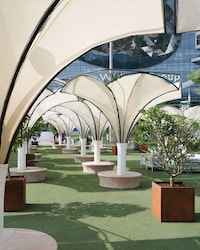

MIA Design Studio was commissioned by Ashui—”a built environment media company”—to envision and develop a pavilion for architectural events. The structure is located in a sub-city in the northeast of Ho Chi Minh City, titled Thủ Đức. Titled ‘The Straw Pavilion,’ the project occupies a parkland of vegetable and fruit gardens. MIA Design Studio intentionally focused on creating a pavilion that blends with the surrounding environment.
As the name might suggest, ‘The Straw Pavilion’ looks “like a giant pile of straw.” The object also is “an image of memory, one that belongs to the Vietnamese countryside.” MIA Design Studio developed the building in such a way that the structure “shifts” depending on the angle that individuals choose to view it from.
Image Credit: Trieu Chien
What Makes This Trend Stand Out
- Nature-inspired Pavilions
- Opportunity for architecture firms to design pavilions that blend seamlessly with their natural surroundings.
- Flexible Structures
- Opportunity to create structures that shift and change depending on the viewer's perspective.
- Sustainable Event Spaces
- Opportunity to design event spaces that are environmentally sustainable and incorporate natural elements.
Sectors Adopting This
- Architecture
- Architecture firms can incorporate nature-inspired designs and flexible structures in their pavilion projects.
- Event Planning
- Opportunity to offer environmentally sustainable pavilion spaces to clients in the event planning industry.
- Environmental Conservation
- Opportunity to promote environmental conservation by incorporating natural elements into pavilion designs and construction.