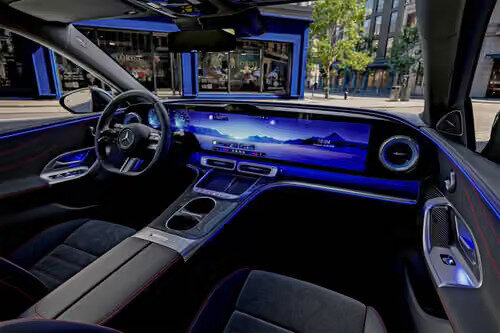
The new Mercedes-Benz physical controls strategy will reintroduce tactile switches across future vehicle interiors after years of touchscreen-focused cabin design. CEO Ola Källenius confirmed the automaker will balance physical buttons with large digital displays, acknowledging that previous interiors prioritized technology over convenience. Signature features such as the 56-inch MBUX Hyperscreen will remain central to upcoming models, while essential controls will return as dedicated physical switches to improve everyday usability.
The newly updated approach follows similar interior design changes from Ferrari, Volkswagen, and Hyundai, alongside new Euro NCAP regulations taking effect in 2026 that require physical controls for key safety functions including turn signals, hazard lights, and windshield wipers. Mercedes-Benz has already reinstated physical steering wheel controls, with some additional tactile switches planned across future passenger vehicles.
Image Credit: Mercedes-Benz
What's Driving This Trend
- Tactile Luxury Interfaces
- Premium automakers are rediscovering physical controls as a differentiator, creating space for refined materials, haptic precision, and ergonomic design to become new luxury benchmarks.
- Hybrid Digital Cabins
- Vehicle interiors are shifting toward balanced ecosystems where expansive screens coexist with dedicated switches, opening opportunities for smarter interaction models that reduce distraction.
- Safety-driven Controls
- Regulatory pressure around essential functions is accelerating the return of standardized physical inputs, giving suppliers room to innovate in compliant, intuitive cockpit components.
Who This Affects Most
- Automotive Manufacturing
- Major vehicle brands are recalibrating cabin design strategies, with usability-led interiors becoming a competitive area for premium and mass-market models alike.
- Human-machine Interface Design
- Interface specialists can shape the next generation of in-car experiences by blending tactile feedback, digital displays, and safety-conscious control placement.
- Automotive Components
- Demand for high-quality buttons, switches, steering wheel controls, and haptic modules is creating renewed relevance for component makers focused on durable physical interaction systems.