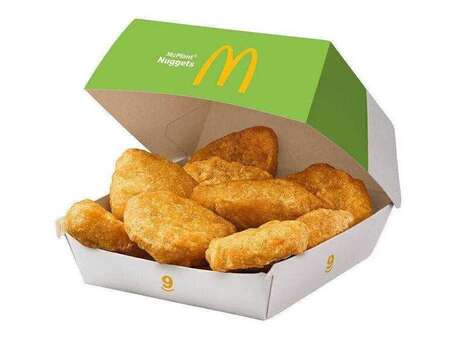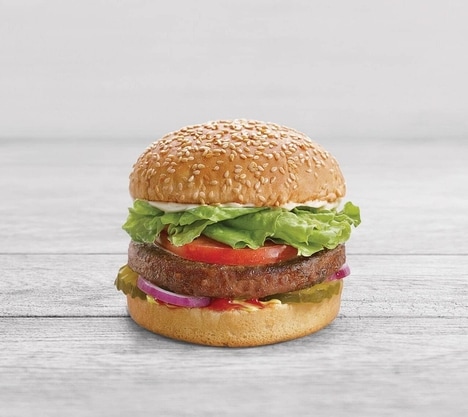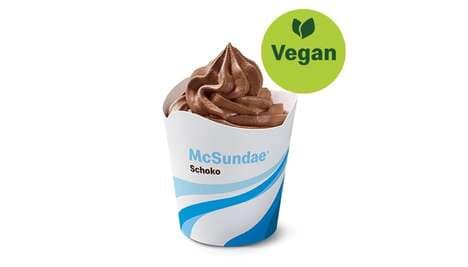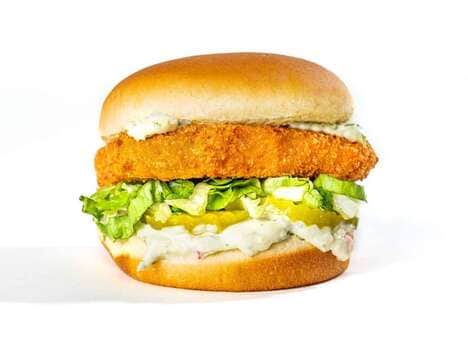
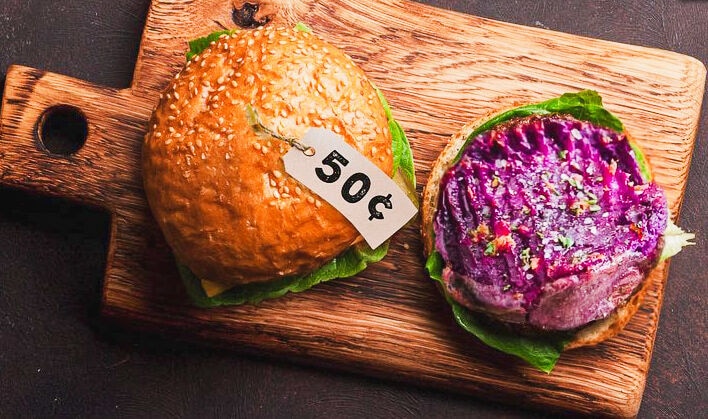
McDonald's has announced a new vegan offering for its Netherlands locations titled the 'McYam.' The McYam was created through a collaboration between McDonald's and 'Eosta,' a Dutch food company. McDonald's sought a new alternative meat product for its Netherlands locations due to a new legislation in the Netherlands that would implement am eat and sugar tax. The McYam was selected because of its closeness to meat as well as its low, 50-cent production cost.
The yam-based pattie in the McYam contains protein and fat, making it comparable to plain red meat. Additionally, the yam pattie is flavor-diverse due to its subtle sweetness. Simply using McDonald's original burger recipe, which contains onions, pickles, and condiments is enough to make the McYam a delicious alternative to meat. Aside from this, McDonald's will use the McYam pattie to create specialty burgers and offerings while it experiments with toppings and dressings.
Image Credit: Eosta, McDonald's
What Makes This Trend Stand Out
- Plant-based Burgers
- Companies can innovate by creating low-cost, protein-rich, and flavor-diverse alternatives to meat products.
- Collaboration with Food Companies
- Collaborating with food companies can lead to the development of more sustainable and healthy food options.
- Specialty Burger Offerings
- Companies can experiment with toppings and dressings to create unique and personalized burger options.
Sectors Adopting This
- Fast Food
- Fast food chains can reduce their carbon footprint by offering plant-based alternatives while still providing affordable prices.
- Food Production
- Food production companies can use yams and other root vegetables to create sustainable, low-cost, and nutritious alternatives to meat products.
- Food Retail
- Food retailers can showcase and provide innovative plant-based products, and especially affordable and healthy options for food-conscious consumers.