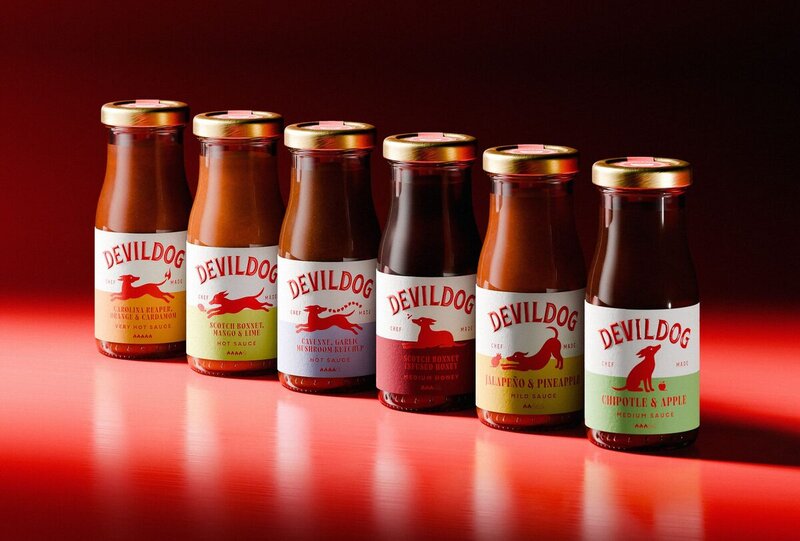
Studio Unbound reworked DevilDog so its British chef-made hot sauces speak to food lovers, not just heat seekers. It replaces an older look that did not fully match the quality of the range. The refresh centers on a mischievous dog mascot with horn-like ears, turning the line into a flavor companion for cooking, eating and sharing.
On pack, the letter D flips into a devil-head mark, giving the bottles a quick recognition cue. A witty voice with light canine references keeps the branding playful without pulling attention away from the food. That balance makes the range read more like a pantry staple than a novelty challenge.
The food-lover target widens DevilDog's reach beyond traditional hot sauce buyers and turns each bottle into a broader flavor purchase. Positioning the range as a cooking companion moves the category away from pain theater and toward taste-led branding.
Image Credit: DevilDog Hot Sauce
Why This Trend Is Growing
- Mascot-led Condiments
- Character-driven packaging gives everyday sauces stronger shelf recognition while building emotional affinity beyond heat or novelty claims.
- Taste-first Heat
- Hot sauce branding centered on flavor complexity broadens appeal to home cooks seeking versatile pantry staples rather than extreme spice experiences.
- Playful Premium Identity
- Lighthearted visual systems paired with quality cues create room for artisanal food brands to feel approachable without losing credibility.
Industries Being Reshaped
- Condiments
- Flavor-led positioning expands condiment usage occasions across cooking, dipping and sharing, shifting growth away from single-use novelty products.
- Food Packaging
- Distinctive mascot marks and flexible label systems offer smaller brands a way to compete through instant recognition in crowded retail environments.
- Specialty Foods
- Chef-made products with accessible storytelling can bridge gourmet credentials and mainstream purchasing behavior, unlocking wider household adoption.