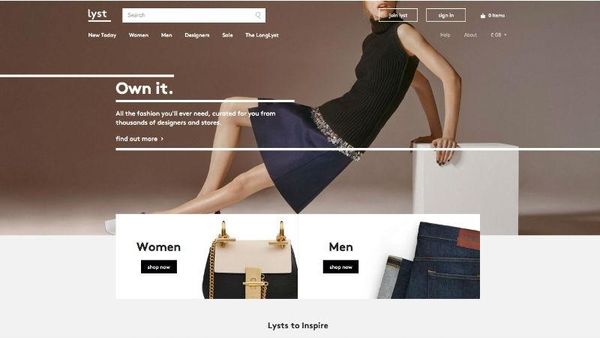
Most online shoppers who land on Lyst's homepage will have no idea of some of the impressive technology that powers the e-commerce fashion platform.
Like many other retail websites, Lyst stresses convenience by featuring a diverse product assortment from an array of brands, but the numbers that Lyst carries are significantly higher than most. From this platform, it's possible to shop from more than 11,000 brands and retailers from a single website.
Behind the scenes, Lyst employs a data science and analytics team that's able to create a real-time map of how consumers are shopping. For its inventive take on e-commerce and use of big data, Lyst has been named one of the fastest growing and most disruptive technology companies by Future Fifty.
What's Driving This Trend
- Data Science in E-commerce
- The use of data science and analytics in e-commerce platforms like Lyst is revolutionizing the way consumers shop online.
- Real-time Consumer Behavior Mapping
- The ability to create a real-time map of how consumers are shopping provides valuable insights for businesses to enhance their marketing strategies and personalize the shopping experience.
- Diverse Product Assortment
- Platforms like Lyst that offer a wide range of products from multiple brands and retailers are gaining popularity, providing customers with convenience and choice.
Who This Affects Most
- E-commerce
- The e-commerce industry is constantly evolving, and the integration of data science and analytics is opening up new possibilities for growth and innovation.
- Fashion Retail
- Fashion retailers are leveraging data science and analytics to better understand consumer preferences and tailor their products and marketing strategies accordingly.
- Technology
- The use of big data and analytics in platforms like Lyst showcases the potential for disruptive innovation within the technology industry, specifically in the realm of e-commerce.