Celestron, the leading telescope brand globally, has introduced the Lumina Program — a buy-one, give-one initiative that pairs the purchase of a telescope model with the donation of an identical unit to a K-12 school within the United States.
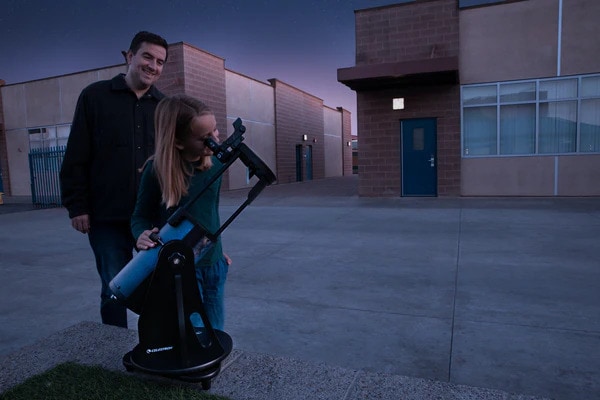
The Lumina Program is centered on the Lumina 130mm Tabletop Dobsonian Telescope, a portable and user-friendly instrument designed to provide clear views of celestial objects for both beginners at home and students in an educational setting. Educators can integrate the telescope into classroom lessons, after-school STEM clubs, star parties, or even loan programs that allow students to take the telescope home for family observation.
Celestron's Lumina Program transforms a standard commercial transaction into a direct philanthropic act, with the company and its customers effectively collaborating to place astronomy equipment into the hands of young learners who might otherwise lack access.
Image Credit: Celestron
What Makes This Trend Stand Out
- Buy-one-give-one Educational Philanthropy
- Leveraging retail purchases to fund direct classroom resources creates a scalable model for companies to redistribute physical learning tools to under-resourced schools.
- Accessible STEM Tools
- Affordable, portable scientific instruments designed for ease of use are lowering barriers for hands-on STEM experiences across diverse K-12 environments.
- Classroom-to-home Learning Kits
- Programs that enable students to borrow or take home educational devices are expanding informal learning opportunities and family engagement with curricular topics.
Sectors Adopting This
- Education Technology
- Integrating simple hardware with curriculum-aligned resources and teacher support is creating new product categories that blend tech adoption with equitable access goals.
- Consumer Optics
- Mass-market telescope and optics manufacturers are positioned to disrupt traditional distribution by embedding philanthropic distribution channels into core sales models.
- Nonprofit Education Partnerships
- Collaborations between companies and educational nonprofits are evolving into coordinated sourcing and deployment systems that concentrate resources where gaps in STEM access are greatest.