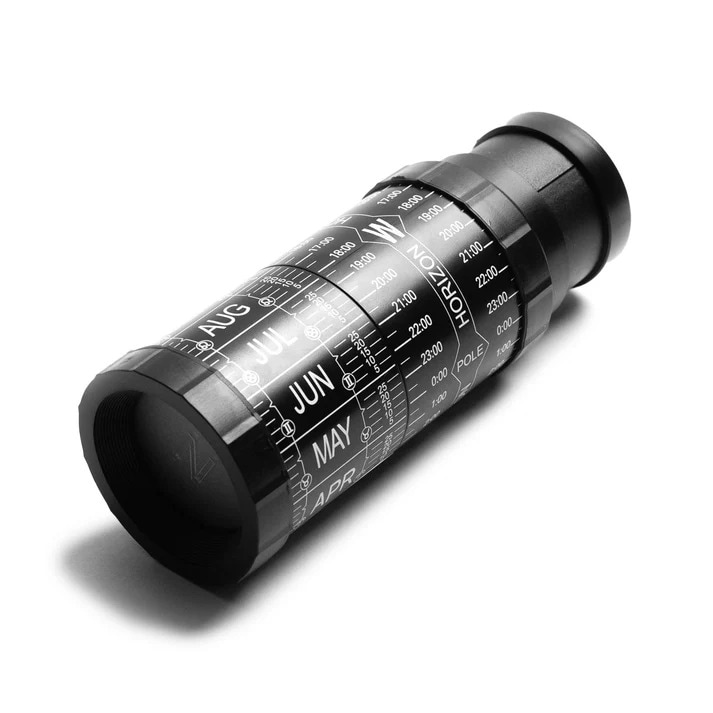
The Stellarscope is a handheld star-mapping telescope introduced by Bernard Vuarnesson and sold via Uncrate, featuring integrated computer-generated star maps that align with the night sky. The kaleidoscope-like device uses latitude-specific adapters and adjustable day-and-time settings to display the corresponding chart, with a night-viewing light for low-light use. Sized at 6" by 2.5" and manufactured in France, the Stellarscope is calibrated for accuracy between 20° and 60° north or south latitude and can help users identify more than 1,500 stars and constellations.
For casual stargazers and travelers, the tool turns skywatching into a guided experience by removing app dependency and offering a tactile, analog navigation aid; its portability and clear mapping reflect a broader trend toward device-driven, offline exploration tools for outdoor leisure.
Image Credit: Stellarscope
Key Themes Behind This Trend
- Analog-digital Hybrid Devices
- Physical instruments that embed digital data present opportunities to redefine user trust and longevity by reducing reliance on networked apps while retaining rich informational layers.
- Portable Offline Navigation
- A focus on compact, offline-capable mapping tools enables extended exploration in remote environments where connectivity is limited, challenging cloud-dependent navigation models.
- Personalized Astronomical Tools
- Customization by latitude and time introduces a market for location-aware, low-complexity devices that deliver highly relevant celestial information without constant software updates.
Where This Applies
- Outdoor Leisure and Recreation
- Recreational gear that combines tactile design with embedded mapping data could alter how hobbyists engage with nature and seek experiential products.
- Consumer Electronics
- Compact, analog-forward gadgets challenge prevailing smart device paradigms by prioritizing battery-free or low-power solutions for focused functionality.
- Tourism and Travel Gear
- Travel-oriented tools that remove app dependency have potential to reshape traveler expectations for reliable, easy-to-use navigational accessories in low-connectivity destinations.