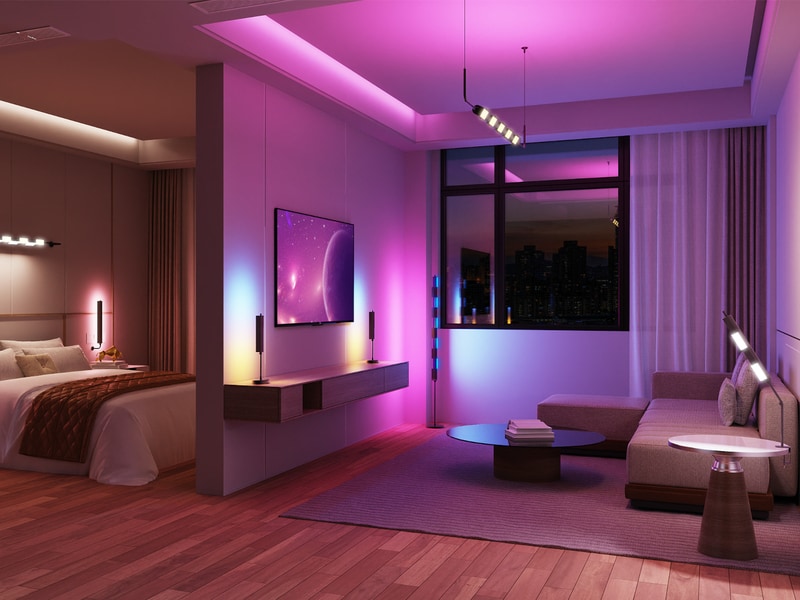
The LumiBlocks V1 modular lighting system is a configurable LED lighting product composed of independent magnetic blocks that snap together to form tailor-made illuminations. Designed as a re-imagining of fixed lighting fixtures, the system uses magnets to both align blocks and transfer low-voltage power between segments, allowing users to add or remove units to suit different spaces and tasks. Each block contains a full-color RGBCW LED capable of producing saturated color light and practical white light with adjustable color temperature.
Blocks can rotate a full 360 degrees to direct light where needed, from down-toward-surface task illumination to ambient washes on walls or ceilings. A connected control layer supports on-device buttons, smartphone app control, and voice operation through compatible assistants, permitting per-block brightness, color, and scene adjustments. The system generates up to 1 500 lumens with ten blocks connected and can reconfigure between styles such as linear runs behind desks, clustered accent lighting, or suspended arrangements.
Image Credit: Peter Wu
What Makes This Trend Stand Out
- Modular Lighting Adoption
- Rising preference for configurable fixtures that adapt to changing spatial needs creates potential for products that replace fixed lighting with reconfigurable hardware and aesthetics.
- Magnetic Power Transfer
- Magnetically aligned connectors that transmit low-voltage power enable compact, tool-free assemblies and new form factors unconstrained by traditional wiring.
- Per-block Intelligent Control
- Distributed control at the module level allows fine-grained scenes and localized sensing, opening paths for lighting to act as a spatially aware, responsive surface.
Sectors Adopting This
- Residential Lighting
- Flexible, snap-together systems offer homeowners opportunities for personalized ambiance and evolving layouts that avoid costly rewiring or fixture replacement.
- Commercial Office Design
- Workspace planners can leverage reconfigurable luminaires to tailor task and collaboration zones, enabling lighting to reflect dynamic operational needs and branding.
- Smart Home Platforms
- Interoperable module-level controls present a route for platform providers to integrate lighting as a granular endpoint within broader automation, sensing, and energy-management services.