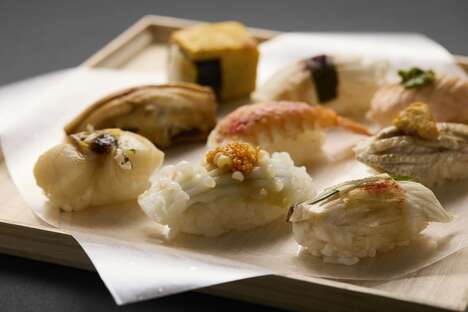
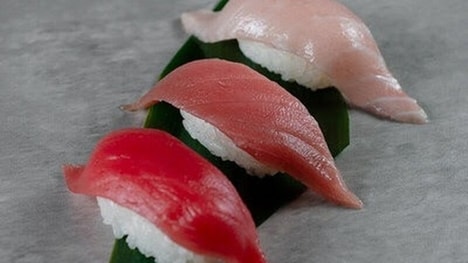
Lucky Robot is a Japanese restaurant based in Austin and it embodies a unique standard when it comes to its fish. It celebrates traditional practices and looks for dry-aged fish. Chef Jay Huang explains that "fresh fish is boring, bland, and crunchy." He claims to be the first chef in Texas to bring dry-aged fish to the city.
The century-old practice comes from Japanese heritage, used to create tender seafood. Historically, sushi chefs age fish fillets between kombu sheets for 24 hours -- this is known as kombujime. Lucky Robot has temperature-controlled cabinets to dry-age its fish, blurring the gap between science and traditional processes. Huang explains that to create a better eating experience, “time and enzymatic action relax the muscles and transform amino acids into flavor molecules.”
Image Credit: Lucky Robot
Key Themes Behind This Trend
- Dry-aged Seafood
- Restaurants and food companies can explore the use of dry-aging techniques to add depth of flavor to seafood dishes.
- Blending Technology and Tradition
- Incorporating temperature-controlled cabinets to age fish is an example of how technology can enhance traditional food preparation methods.
- Alternative Flavor Profiles
- The use of dry-aged fish instead of fresh fish can provide a unique and bolder flavor profile for sushi and seafood dishes.
Where This Applies
- Food and Dining
- Restaurants can explore the use of dry-aging techniques for seafood dishes to differentiate themselves in the highly competitive food industry.
- Technology
- Technology companies can consider developing temperature-controlled cabinets for dry-aging seafood, providing an innovative solution and disrupting the seafood industry.
- Fishery
- Dry-aging techniques can be used by fishery businesses to provide unique and high-value products to restaurants and food companies, creating a new market for them to compete in.