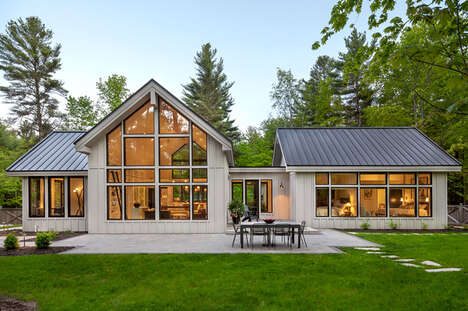
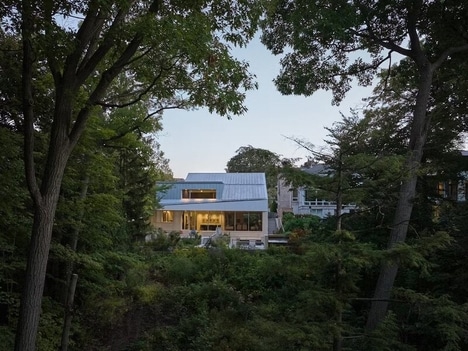
Plant Prefab announces a series of Passive House-certified modular home designs entitled LivingHomes that are simplistic and have a captivating aesthetic. All of these are designed in partnership with Richard Pedranti Architect, a design company based in Pennsylvania. The LivingHomes series is the brand's line of sustainable buildings that have net-zero options.
The company is keeping consumers in mind that are seeking a sustainable option that is built from the ground up. It is a 2 story home with 4 bedrooms and 3 bathrooms measuring out to be 2218 square feet and topped off with a gabled zinc roof. The estimated price is about $586,257 and about $928,407 for a completed house. In order to be certified as a Passive House, the modular designs must have a high degree of insulation, solar orientation requirements, high performing windows and doors, and much more.
Image Credit: Plant Prefab
What's Driving This Trend
- Passive House-certified Modular Homes
- The trend towards sustainable prefabricated homes that are designed to meet Passive House certification requirements presents an opportunity for disruptive innovation in the construction industry.
- Net-zero Modular Home
- The rising demand for net-zero homes presents an opportunity for disruptive innovation in the modular home industry as consumers seek sustainable, energy-efficient housing solutions.
- Simplistic Modular Designs
- The trend towards simplistic, modern modular homes presents an opportunity for disruptive innovation in the modular home industry as consumers prioritize aesthetics and design alongside sustainability and energy-efficiency.
Who This Affects Most
- Modular Construction Industry
- As demand for sustainable, energy-efficient housing grows, the modular construction industry has an opportunity to develop innovative solutions and disrupt traditional homebuilding methods.
- Sustainable Building Materials Industry
- The trend towards sustainable and energy-efficient modular homes presents an opportunity for disruptive innovation in the sustainable building materials industry, as manufacturers develop new products that meet the unique needs of this market.
- Home Design and Architecture Industry
- As consumers increasingly prioritize design and aesthetics alongside sustainability and energy-efficiency, the home design and architecture industry has an opportunity to develop innovative modular home designs that meet these evolving consumer preferences.