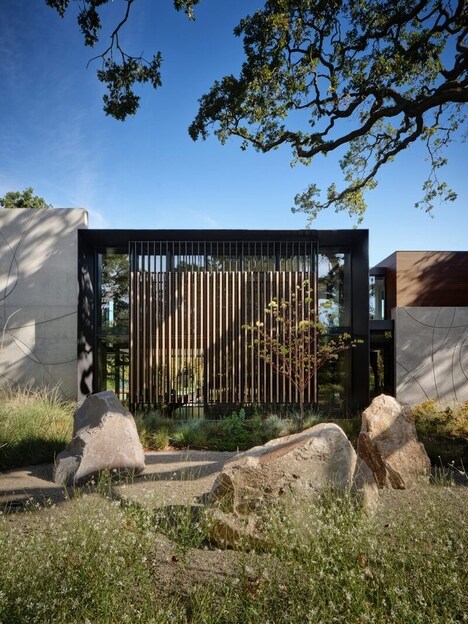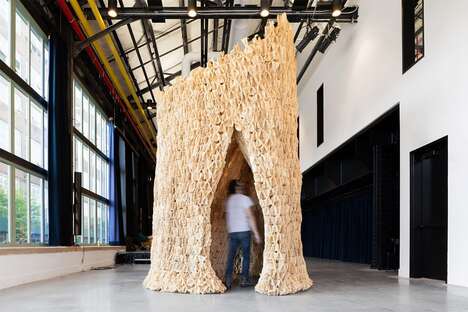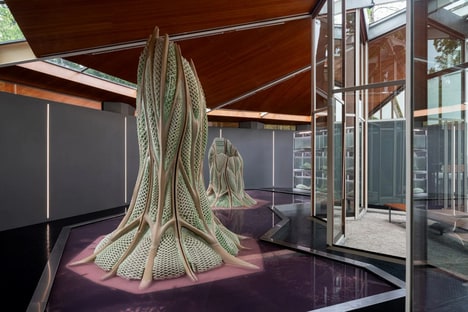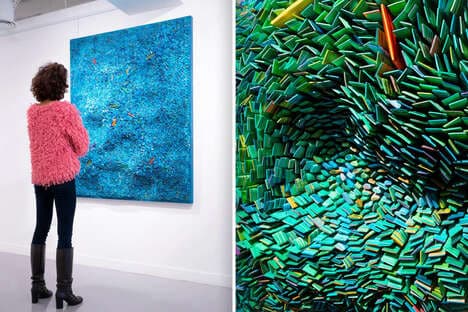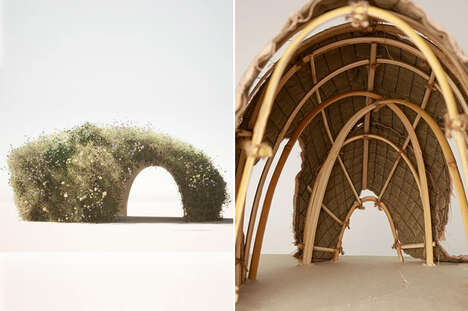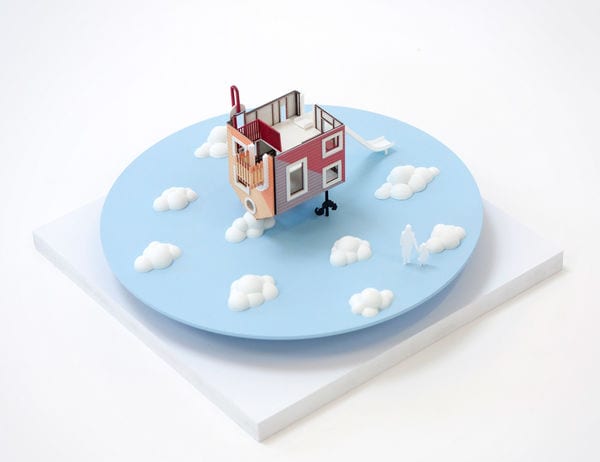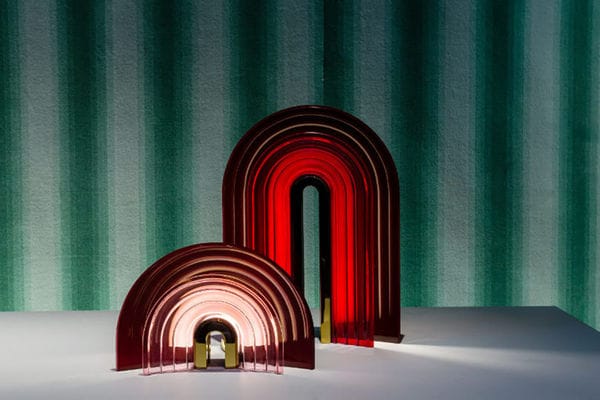

In 2017 Austrian architect Julian Jauk exhibited his conceptualized living architecture sculpture model that aims to make sense of the dualism, existing between incorporeal and material things, as well as natural and artificial substances. Until now, living architecture has been able to curiously adapt and morph with regard to environments, but Jauk's model is a kinetic and highly sensitive structure that also responds to human emotional ques.
The conceptualized living architecture sculpture utilizes naturally-inspired bionic technology, whose algorithm mimics biological criteria and transports it into the active framework of the structure. Participants are able to stimulate the architecture by setting it to their mood and changing the intensity and dynamic of energy and light sources.
Photo Credits: Julian Jauk and Monika Robak
Key Themes Behind This Trend
- Living Architecture
- The trend of using natural bionic technology and incorporating emotional cues into architecture can disrupt traditional building design, creating structures that interact with humans and their environment.
- Kinetic Structures
- Kinetic architecture responds dynamically to environmental changes or human behavior, and applying this technology to building design can produce highly sensitive and sustainable structures.
- Adaptive Environments
- Building environments that can adapt and morph according to their surroundings and the people who occupy them has the potential to revolutionize architecture and urban planning.
Where This Applies
- Architecture
- The architecture industry can utilize bionic algorithms in building design to create living structures that are responsive to human emotion and capable of adapting to changing conditions.
- Sustainability
- The integration of living technology into building design not only creates unique structures but also has the potential to increase sustainability in the construction industry through the use of renewable resources and adaptive design.
- Smart Cities
- Applying kinetic architecture to urban planning and building design can create adaptive and responsive environments for city residents, leading to the development of smarter and more sustainable cities.