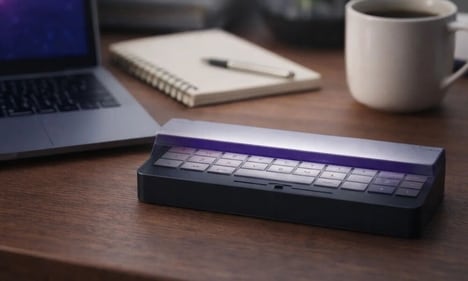
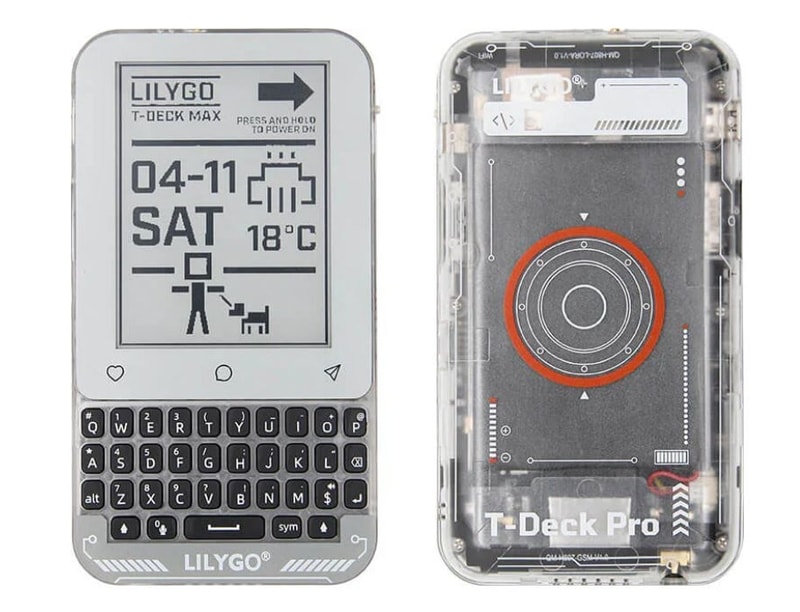
The LILYGO T-Deck MAX mobile dev kit is a communications solution engineered to put a range of capabilities and powers in the hands of the user to work well for amateur or advanced users alike. The device boasts an ESP32-S3 microprocessor alongside a 3.1-inch E-ink screen accented by a QWERTY keyboard to work well for interface navigation. The unit offers support for WiFi, Bluetooth, 4G LTE and a LoRa antenna, and sets itself apart from previous models thanks to a new audio channel output selection switch with a DRV2605 vibration motor chip as well.
The LILYGO T-Deck MAX mobile dev kit has a smartphone-like design aesthetic, but isn't targeted towards end consumers due to its programmable functionality that targets hobbyists and developers. The unit is rounded out with a 1,500mAh battery and a microSD card reader.
Why This Trend Is Growing
- Modular Networked Microcontrollers
- Increasingly compact dev kits that combine programmable microcontrollers with swappable communication modules enable new classes of distributed, low-power edge devices with customizable connectivity profiles.
- Hybrid E-ink Interfaces
- E-ink displays paired with tactile QWERTY inputs and low-power processors promote prolonged field use for text-heavy or read-centric applications where battery life and sunlight legibility are critical.
- Multi-radio Integration
- Devices that natively support WiFi, Bluetooth, LTE and LoRa in a single unit create opportunities for seamless bridging between local, wide-area and low-power mesh networks within heterogeneous deployments.
Industries Being Reshaped
- Iot Development Platforms
- Developer-focused hardware ecosystems that prioritize programmability and multiple communications standards can shift prototype-to-production timelines by enabling faster, in-situ network testing and integration.
- Industrial Automation
- Compact, battery-efficient micro dev devices with vibration feedback and multi-protocol radios offer pathways for deploying low-cost monitoring nodes in remote or harsh industrial environments where wired infrastructure is impractical.
- Education and Maker Spaces
- Affordable, smartphone-styled dev kits featuring familiar input methods and visible internals can transform hands-on learning by making embedded systems and wireless networking more approachable for hobbyists and students.